<?xml version="1.0" encoding="utf-8"?><feed xmlns="http://www.w3.org/2005/Atom" ><generator uri="https://jekyllrb.com/" version="3.10.0">Jekyll</generator><link href="https://benjaminnoble.org/feed.xml" rel="self" type="application/atom+xml" /><link href="https://benjaminnoble.org/" rel="alternate" type="text/html" /><updated>2026-04-29T14:45:54-07:00</updated><id>https://benjaminnoble.org/feed.xml</id><title type="html">Benjamin Noble</title><subtitle>personal description</subtitle><author><name>Benjamin Noble</name><email>b2noble@ucsd.edu</email></author><entry><title type="html">Talking to AI: Prompting, Context, and Conversation</title><link href="https://benjaminnoble.org/blog/talking-to-ai" rel="alternate" type="text/html" title="Talking to AI: Prompting, Context, and Conversation" /><published>2026-04-28T00:00:00-07:00</published><updated>2026-04-28T00:00:00-07:00</updated><id>https://benjaminnoble.org/blog/talking-to-ai</id><content type="html" xml:base="https://benjaminnoble.org/blog/talking-to-ai"><![CDATA[<figure>
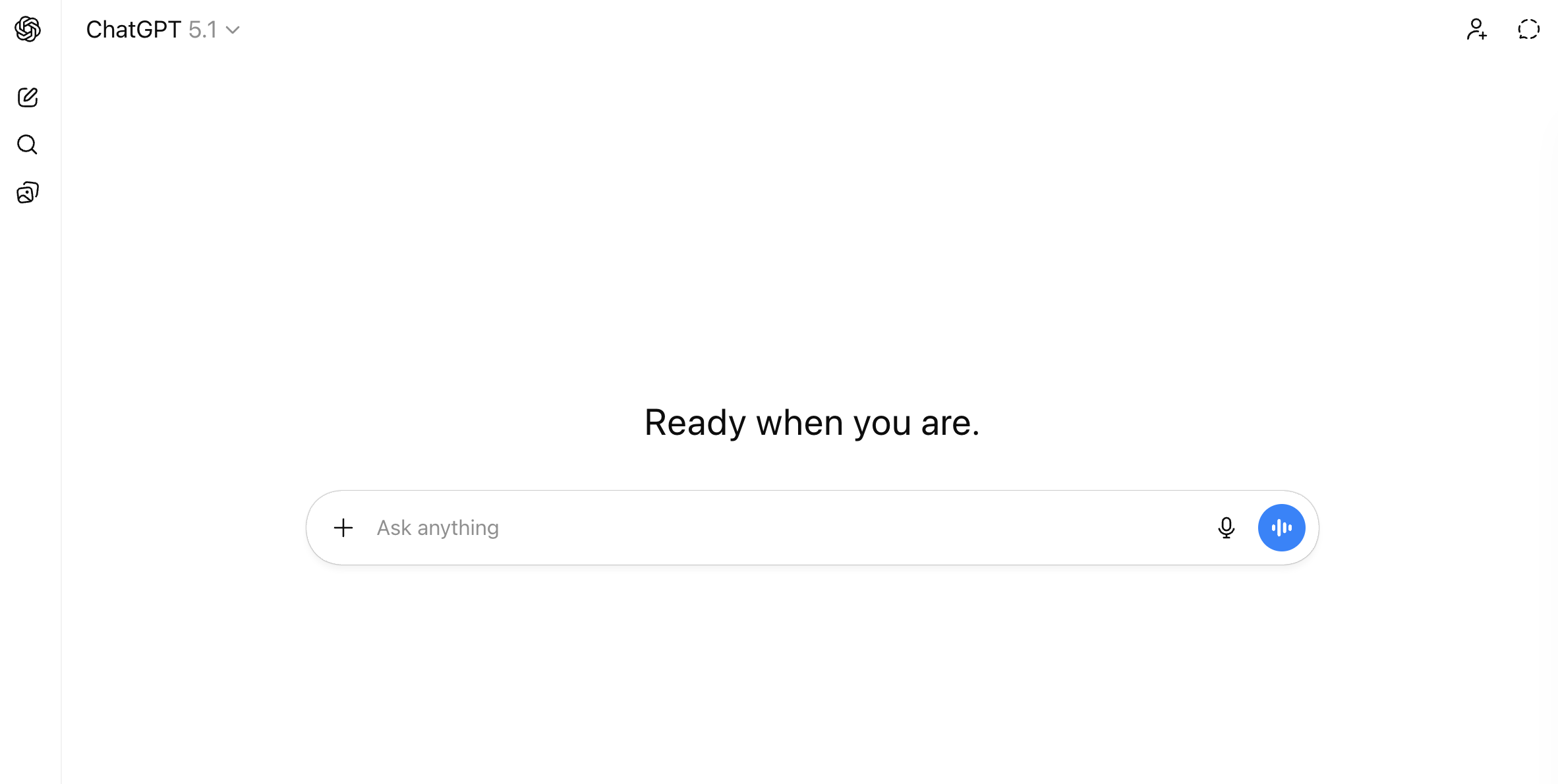
  <img src="/images/robots.png" alt="Stylized illustration of a human and a robot collaborating" />
</figure>

<hr />

<p>We are all writers. And as writers, we have all faced the blank page. A blinking cursor. A world of possibilities. It should be liberating. But more often than not, it’s paralyzing. When you have the freedom to write anything you want, it’s not clear what you <em>should</em> write. And the result, more often than not, is that you write nothing at all.</p>

<p>Part of the appeal of large language models is that they promise to free us from the blank page.</p>

<figure>
  <img src="/images/chat-box.png" alt="A blank chat input box" />
  <figcaption>The blank box is the new blank page.</figcaption>
</figure>

<p>But when you visit ChatGPT.com or claude.ai, you quickly realize you haven’t so much escaped the blank page as traded it for a blank box. The interface literally invites you to “ask anything.”</p>

<p>Anything you want to know, anything you want to create, is there, waiting for you…if only you knew what to ask.</p>

<p>You can type anything and the model will faithfully respond. LLMs, at their core, are predict-the-next-word machines. If you give them a little bit of text, they’ll take it and run. But the obvious asks (outline my paper, write a syllabus, create an essay assignment) yield generic outputs. The result rarely comes close to the vision in your head. And this is where most people say, “AI isn’t very good” and give up.</p>

<p>But the problem, often, isn’t the model. It’s the writer. The prompt was thin. It was lacking context. And no one provided feedback or steering. And like writing, working with these models is a skill, one that can be improved through practice.</p>

<hr />

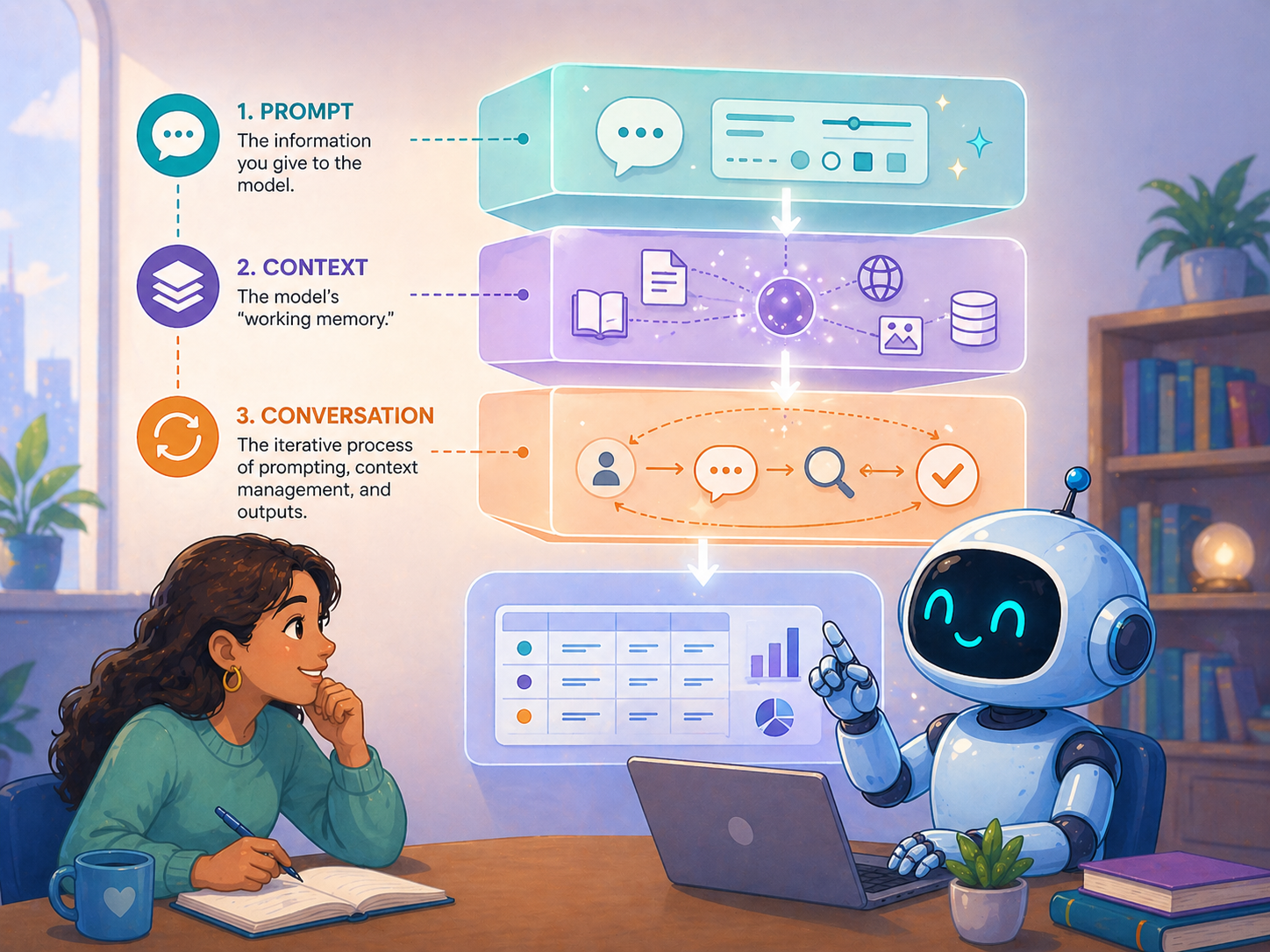
<p>In this guide, I cover three foundational skills for working with LLMs: <strong>prompting</strong>, <strong>context</strong>, and <strong>conversation</strong>. These skills are durable (they will still be relevant when the next model is released) and they are model agnostic (they work for ChatGPT, Claude, Gemini, or anything else).</p>

<h2 id="three-skills">Three Skills</h2>

<figure>
  <img src="/images/three-skills.png" alt="Diagram of prompting, context, and conversation" />
  <figcaption>Three durable skills, model agnostic.</figcaption>
</figure>

<p>Like any good academic, I want to get my definitions out on the table.</p>

<ul>
  <li><strong>Prompting</strong> is the act of giving the model information. Whatever you type into the box is your prompt. Prompts can be short (“what is the capital of France”), or, as we’ll see, hundreds of words long with detailed instructions, supporting documents, and validation behavior baked in.</li>
  <li><strong>Context</strong> is everything the model knows over the course of a conversation. That includes your prompts, the model’s responses, any documents or images you attach, custom instructions you’ve set, and (in newer models) tool use like web searches.</li>
  <li><strong>Conversation</strong> is the iterative process of prompting, reviewing outputs, and steering the model toward what you actually want.</li>
</ul>

<h2 id="prompting-your-opening-bid">Prompting: Your Opening Bid</h2>

<p>A <strong>prompt</strong> is what you type into the chat box: the instructions you give or questions you ask. Every conversation starts with a first prompt, which sets the tone for everything that follows.</p>

<p>The quality of your prompt directly shapes the quality of your output.</p>

<p>Sometimes a simple prompt is enough. “What is the capital of France” gets you “Paris.” End of story. But most of us want to do more than pour out a bottle of water for a fancy Google search. We want help drafting an outline, analyzing data, brainstorming ideas, writing code, summarizing the literature, or even taking actions on our behalf. Those tasks require more thoughtful instructions.</p>

<p>But what makes for “thoughtful instructions?”</p>

<p>Think about working with a teaching assistant or a graduate researcher. Even a strong RA needs clear directions. You wouldn’t hand someone your dataset and say “analyze this.” You wouldn’t hand a TA a stack of exams and say “grade them.” You wouldn’t hand students a blue book and say “write an essay.”</p>

<p>Your syllabus is 20 pages long because you want to give students all the information they’ll need for your course: an introduction to the topic, the schedule and timeline, materials they’ll need, and procedures and policies. These documents take a lot of time and effort to write. And you wouldn’t blame a student for turning in a one page essay when you didn’t specify the page count. You’d blame yourself for unclear directions and update your assignment accordingly.</p>

<p>Yet when working with AI, most people spend a few seconds writing a prompt, get back something disappointing, and conclude that the model is bad at the task. But the model is just trying to do its best to infer your intent and give you what you want. The instructions just weren’t very good.</p>

<h3 id="one-task-two-prompts">One task, two prompts</h3>

<p>Suppose you want to draft a rubric for a course assignment. Here’s a prompt you might try:</p>

<blockquote>
  <p>Can you write a rubric for an undergraduate literature review paper?</p>
</blockquote>

<p>The model will happily produce a rubric. It’s seen millions of them, so it knows the general shape. But the result will be generic, and you’ll probably feel let down. That’s not a failure of the model. It’s a failure of communication. A graduate TA, given the same instruction, would produce something equally generic, because nothing in the prompt tells them what kind of rubric you want.</p>

<p>Now consider this alternative:</p>

<blockquote>
  <p>I teach an undergraduate course on the U.S. presidency. I’m assigning a 3-page literature review where students must cite five academic sources on unilateral action and summarize their similarities and differences. I’ve attached the assignment description I am providing students. Draft a rubric for this assignment. Use a 4-point scale (Exceeds / Meets / Approaching / Below). Include the following criteria: clarity, accuracy, synthesis, writing. Each criterion should have a one-sentence descriptor for every level. Format as a table. Aim for 400-500 words.</p>
</blockquote>

<p>This prompt is longer. But it’s also something you could give to a TA and expect a result closer to what you wanted. It provides background about the course, the structure of the assignment (with the student-facing handout itself attached), and asks for a specific kind of rubric: the scale, the criteria, the format, the length.</p>

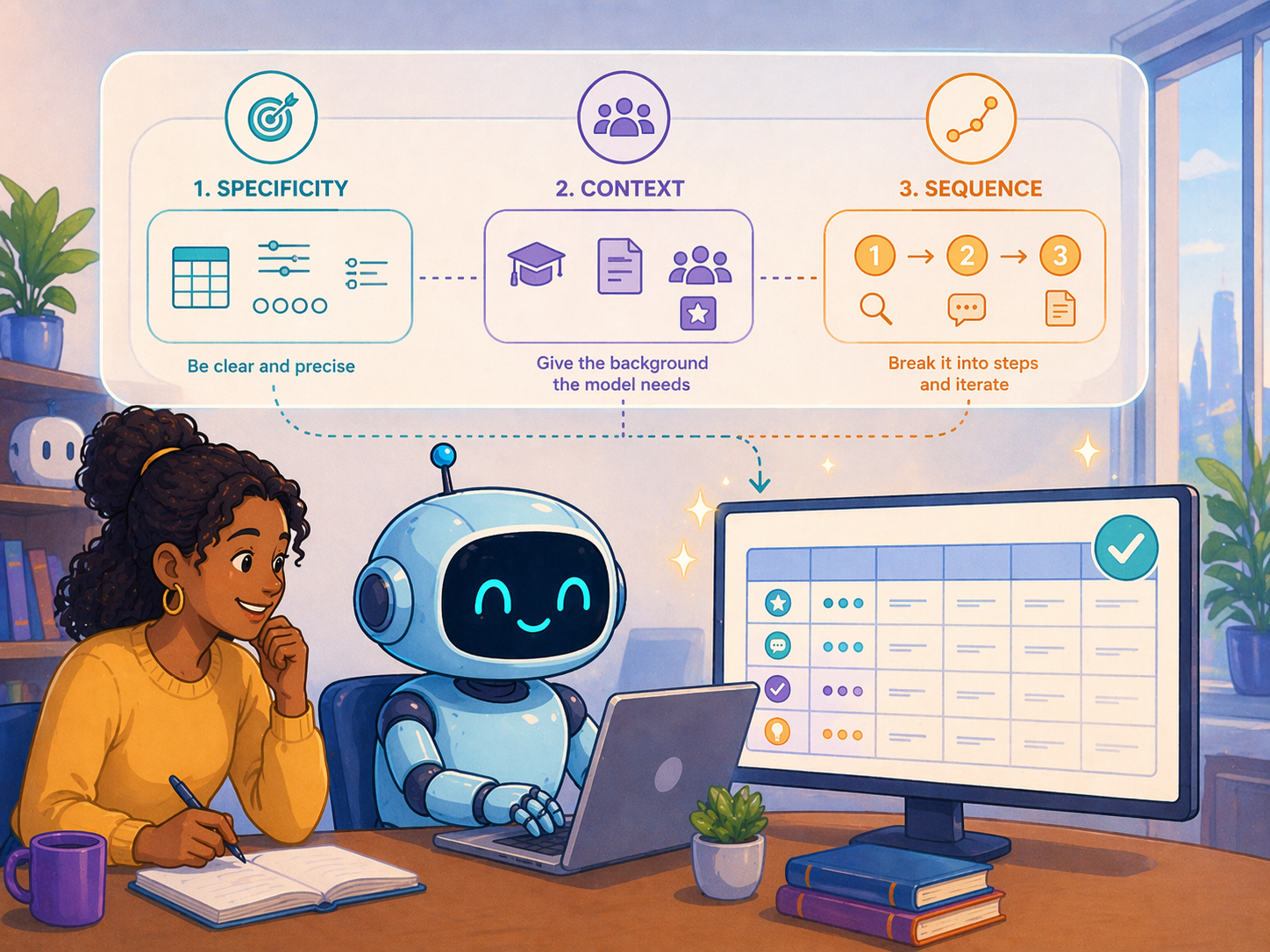
<p>How did I know to write the second prompt instead of the first? Practice and experimentation, mostly. But that’s a pretty unsatisfying answer. So, here are a few core principles that can help you get from A to B.</p>

<figure>
  <img src="/images/prompting-skills.png" alt="Three principles for prompting: be specific, provide background, sequence the work" />
  <figcaption>Three principles for thoughtful prompts.</figcaption>
</figure>

<ul>
  <li><strong>Be specific.</strong> “Write me a rubric” raises a dozen questions the model isn’t going to ask before answering. Should it be holistic or analytic? How many criteria? How long? For what audience? In the absence of specifics, the model wants to be helpful, so it picks the central tendency in its training data, which is rarely what you want. So tell it. Don’t let it guess.</li>
  <li><strong>Provide background.</strong> The model is a blank slate at the start of every new chat.<sup id="fnref:1" role="doc-noteref"><a href="#fn:1" class="footnote" rel="footnote">1</a></sup> It doesn’t know what you teach, who your students are, or what stage of the project you’re in. Tell the model about your class. Paste in the assignment handout. Name your audience. State your goals.</li>
  <li><strong>Sequence the work.</strong> When you have a compound task (e.g., draft a rubric, create grading guidance for the TA, suggest revisions to the assignment handout), resist the urge to ask for everything at once. Models can tackle complex tasks in a single pass. But sequencing gives you more chances to course correct, especially when parts of the ask build on each other. If you revise the assignment, that has implications for the rubric. By splitting requests, you create natural points to review, redirect, and refine.</li>
</ul>

<p>You may have heard the term “prompt engineering,” or seen guides full of magic spells: offer the model a tip, threaten it, role-play as a wizard, write in all caps. These are far less important than simply using a skill you already have. When a prompt fails, the fix is almost never some obscure syntax. The fix is “write instructions you’d be willing to hand to a smart graduate student.” If a grad student could complete the task from your prompt, the model can too.</p>

<h2 id="context-the-models-working-memory">Context: The Model’s Working Memory</h2>

<p>If prompting is the instruction you give in a single turn, <strong>context</strong> is everything the model has access to across the whole conversation. You can think of this like the model’s “working memory.”</p>

<p>Context comes from many places, and it grows over time. There’s a system prompt set by the AI lab itself, telling the model things like “be a helpful assistant” and “give concise responses.” There may be custom instructions you’ve configured (your role, your preferences, your default style). There are the prompts you write, the documents you attach, and even the model’s own previous responses. Newer models can search the web, run code, or call tools. All of that gets folded into the context as the conversation progresses.</p>

<p>Given what I just said about prompting, you might be thinking that more context is always better. Load your prompt with every conceivable detail: the syllabus, all your readings, your CV, and course evaluations from the last three years. The more it knows, the better the answer, right?</p>

<p>Not quite.</p>

<h3 id="inside-the-mind-of-a-model">Inside the mind of a model</h3>

<p>LLMs process information differently than humans, and those differences matter for how you provide context. The analogies that follow (attention, fatigue, memory) are useful ways to think about working with the model. They aren’t literal descriptions of how the architecture works. But the practical implications are real.</p>

<table>
  <thead>
    <tr>
      <th> </th>
      <th><strong>You</strong></th>
      <th><strong>The Model</strong></th>
    </tr>
  </thead>
  <tbody>
    <tr>
      <td><strong>Attention</strong></td>
      <td>Skim, skip, prioritize</td>
      <td>Consumes every token; can’t skim</td>
    </tr>
    <tr>
      <td><strong>Fatigue</strong></td>
      <td>Get tired by exerting effort</td>
      <td>Get tired by consuming content</td>
    </tr>
    <tr>
      <td><strong>Memory</strong></td>
      <td>Imperfect but continuous</td>
      <td>History persists within a chat, none across chats</td>
    </tr>
  </tbody>
</table>

<p>When you read an article, you don’t read it linearly from start to end. You skim. You skip. You prioritize the abstract, the key tables, the conclusion. You ignore page numbers, formatting, acknowledgements, and most of the references. Your eyes literally never land on some pages. You didn’t even know there was an Appendix F. So most of the article never enters your working memory. The model cannot skim. Every token you hand it gets consumed and weighted, including the boilerplate, the references, and yes, even Appendix F. It can’t decide a section is unimportant and look past it. And you can’t tell it to. So irrelevant material isn’t free. It sits in the context window, gets some non-zero weight, and dilutes the response on the part you actually care about.</p>

<p>Models can also experience something like fatigue, although the causes of that fatigue differ between humans and models. You get tired as you work harder. Reading one dense formal theory paper might wear you out. The model is the opposite. The formal theory paper is easy. What degrades the model’s performance is volume. You won’t get tired reading a hundred Dr. Seuss books. But the model will. Because it’s keeping track of every word and every relationship between them so it can predict the next “best” word from the entire conversational history. As the chat grows, outputs get less precise. It’s why a long chat literally feels sluggish in the browser. And it’s why a focused chat tends to produce sharper responses than a sprawling one.</p>

<p>Memory is the third asymmetry. Think about your grad students. You have a sense of what each of them is working on. When they come to your office, you usually need a small reminder about specifics, but the contours are there. The model is different. Within a single chat, the full conversation history is preserved. The model hasn’t forgotten anything you said an hour or a week ago. Across chats, there’s no continuity (with some exceptions for explicit memory features). A new chat is a clean slate. This cuts both ways. Sometimes you want continuity, so you return to an existing chat. Sometimes you want to start fresh because the previous context is no longer relevant or because the chat has gotten too long. That’s a choice you have to make.</p>

<h3 id="three-rules-for-managing-context">Three rules for managing context</h3>

<p>These asymmetries suggest three practical rules:</p>

<p><strong>Be selective.</strong> If you want feedback on your abstract, paste the abstract (and perhaps the intro). Don’t upload the full manuscript with appendices and references. The extra material doesn’t help. In fact, it can actively hurt you by diluting the model’s attention.</p>

<p><strong>Start fresh when performance slows.</strong> When responses get worse, or the browser starts to lag, that’s a signal the conversation has grown too long. Ask the model to summarize the key context you’d need to continue, then paste that summary into a new chat. You preserve continuity without dragging the full transcript along.</p>

<p><strong>Segregate and revisit chats.</strong> Treat chats like folders. One chat per project, one chat per task. Don’t have one mega-chat for everything. When you want to return to an earlier line of work, go back to the original chat and pick up where you left off. The model still remembers everything from that conversation, and you don’t have to re-establish context from scratch.</p>

<h2 id="conversation-iteration-as-a-skill">Conversation: Iteration as a Skill</h2>

<p>Even with an excellent prompt and well-managed context, the model probably won’t nail the ask on the first try. But note, we casually refer to these tools as “chatbots.” The implication is that we’re supposed to <em>talk</em> to them. And fortunately, we can tell them what they did well, what isn’t working, and how they can do better.</p>

<p><strong>Conversation</strong> is the iterative loop where prompting and context work together: you prompt, the model produces, you react, you prompt again. Each turn shapes the next.</p>

<h3 id="your-reaction-is-data">Your reaction is data</h3>

<p>When the model gives you something that’s a little off, you have a some internal reaction. Maybe it’s too long. Maybe the tone is off. Maybe two of the four criteria are good but the others need work.</p>

<p>At this point, people bounce off of the tool. They see a flawed output and conclude that the model just isn’t up to the task. But that reaction is valuable data, and it can help you steer the model on the next conversational turn. Rather than bouncing off, just tell the model what was wrong. What you want instead. “Cut this in half.” “Be more direct.” “Keep the first two criteria, drop the third, and add one for engagement with primary sources.” The model won’t get defensive. It won’t sigh. It’ll probably say “you’re absolutely right” and produce another draft that’s closer to (though probably still not exactly) what you wanted. Then you iterate again.</p>

<h3 id="models-make-mistakes">Models make mistakes</h3>

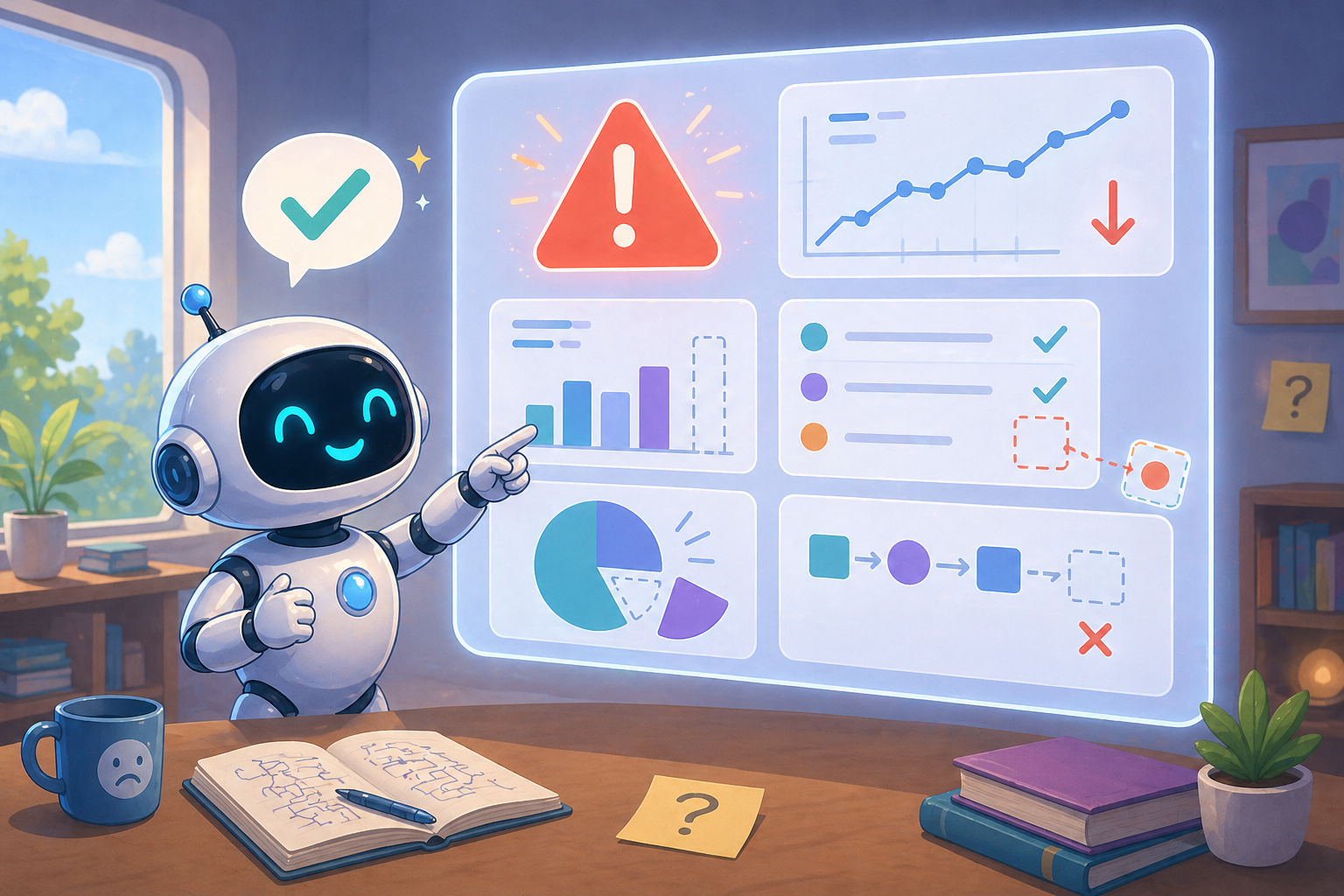
<figure>
  <img src="/images/wrong.png" alt="Illustration of an error or mistake" />
  <figcaption>Models are confidently wrong, and that (probably) won't go away.</figcaption>
</figure>

<p>It’s important to note, though, that even with great prompts, context management, and conversational skill, these models make serious mistakes. Not just tone or length issues. They confidently fabricate facts. They make basic arithmetic mistakes. They write code that silently drops one of the five tables you asked for. It’s a real problem.</p>

<p>And unfortunately, there’s no free lunch. The models are powerful. But they aren’t perfect. And they may never be. It’s the nature of working with weird, stochastic technology that we don’t fully understand. So what do we do with that?</p>

<p>Let me start with an analogy to my research using text analysis methods. On my computer, I have a folder that houses every presidential speech given since 1933. About 26,000 documents. Suppose I want to know the major topics presidents have talked about over time. One option: read every speech and hand-code each one. Lots of upfront labor, high confidence in the result. The other option: run an LDA topic model in a few minutes (in fact, Claude can write all the code and run it for me while I write this guide!), then spend my time validating, interpreting, and adjusting the topics. Either way, the work has to happen. The question is whether I do it on the front end or the back end.</p>

<p>LLMs are similar. Delegating a task doesn’t eliminate the work. It moves it. You shift from doing the task manually to validating and refining the output. For many tasks, especially when scale is involved, the back-end work is faster and more pleasant than the front-end alternative. But pretending the back-end work doesn’t exist is the surest way to be disappointed.</p>

<p>That’s one response to the mistakes problem: accept the tradeoff and budget for validation. But there’s a second response. Everything we’ve discussed so far treats AI as an agent that executes tasks for you, where “mistake” means “produced the wrong output.” That framing is one mode of use, but not the only one.</p>

<p>Some of the most valuable uses of these tools are for work where there is no single right answer, and the notion of a “mistake” doesn’t apply.</p>

<h2 id="ai-as-a-thinking-partner">AI as a Thinking Partner</h2>

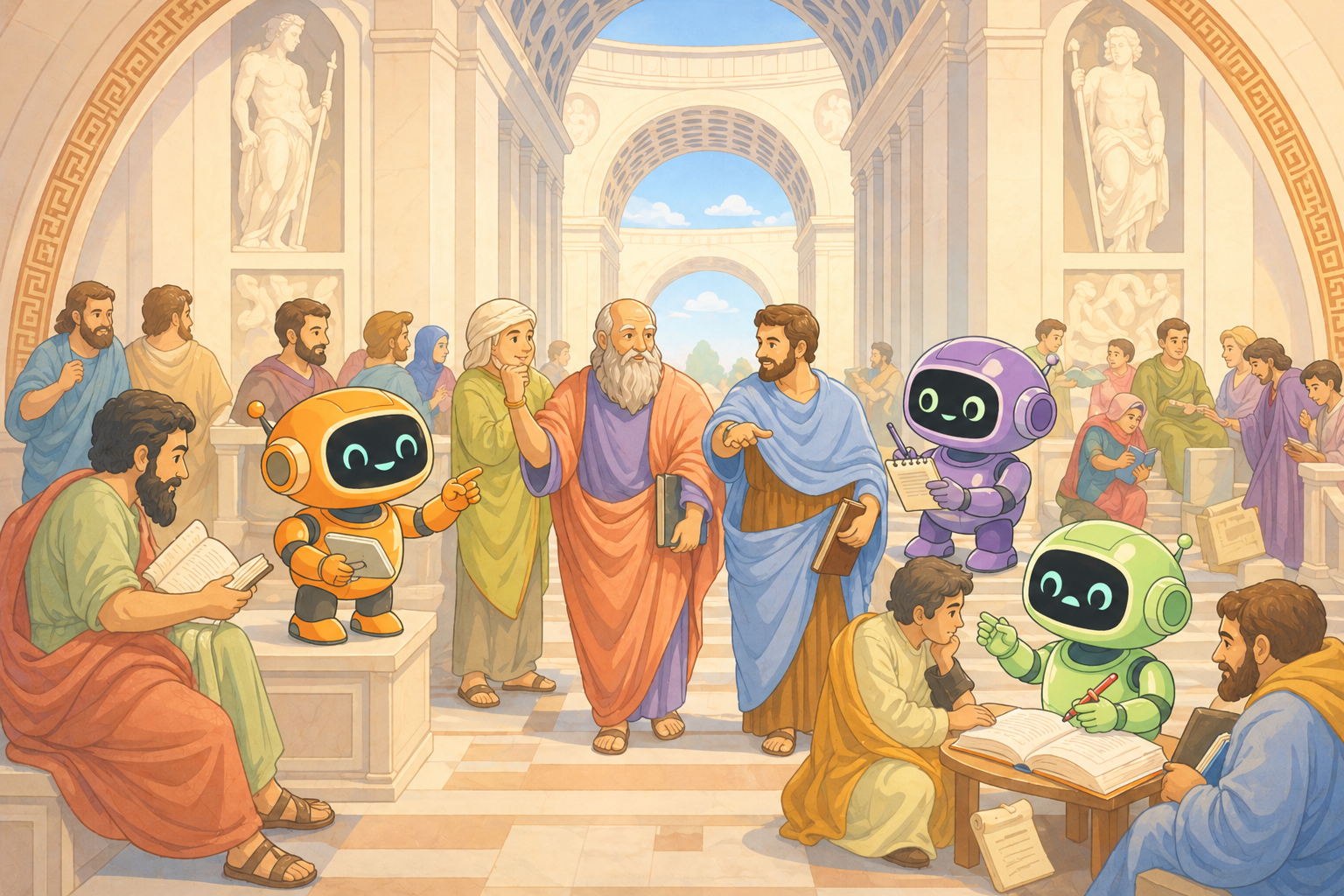
<figure>
  <img src="/images/athens.png" alt="Reference to Raphael's School of Athens" />
  <figcaption>Thinking has always been a conversation.</figcaption>
</figure>

<p>Writing is thinking.</p>

<p>When you sit down to draft an argument, you often discover the idea you had in your head was only half-formed. The act of writing is the act of clarifying. If we hand off all our writing to AI, we lose that clarifying work. And the output is worse anyway, because the model never knew what you actually wanted to say. But in part, that might be because you didn’t really know what you wanted to say either.</p>

<p>The model can still help. Just not by writing <em>for</em> you. The right prompts turn it into something closer to a thinking partner, one that helps you figure out what you want to say in the first place.</p>

<h3 id="interview-mode">Interview mode</h3>

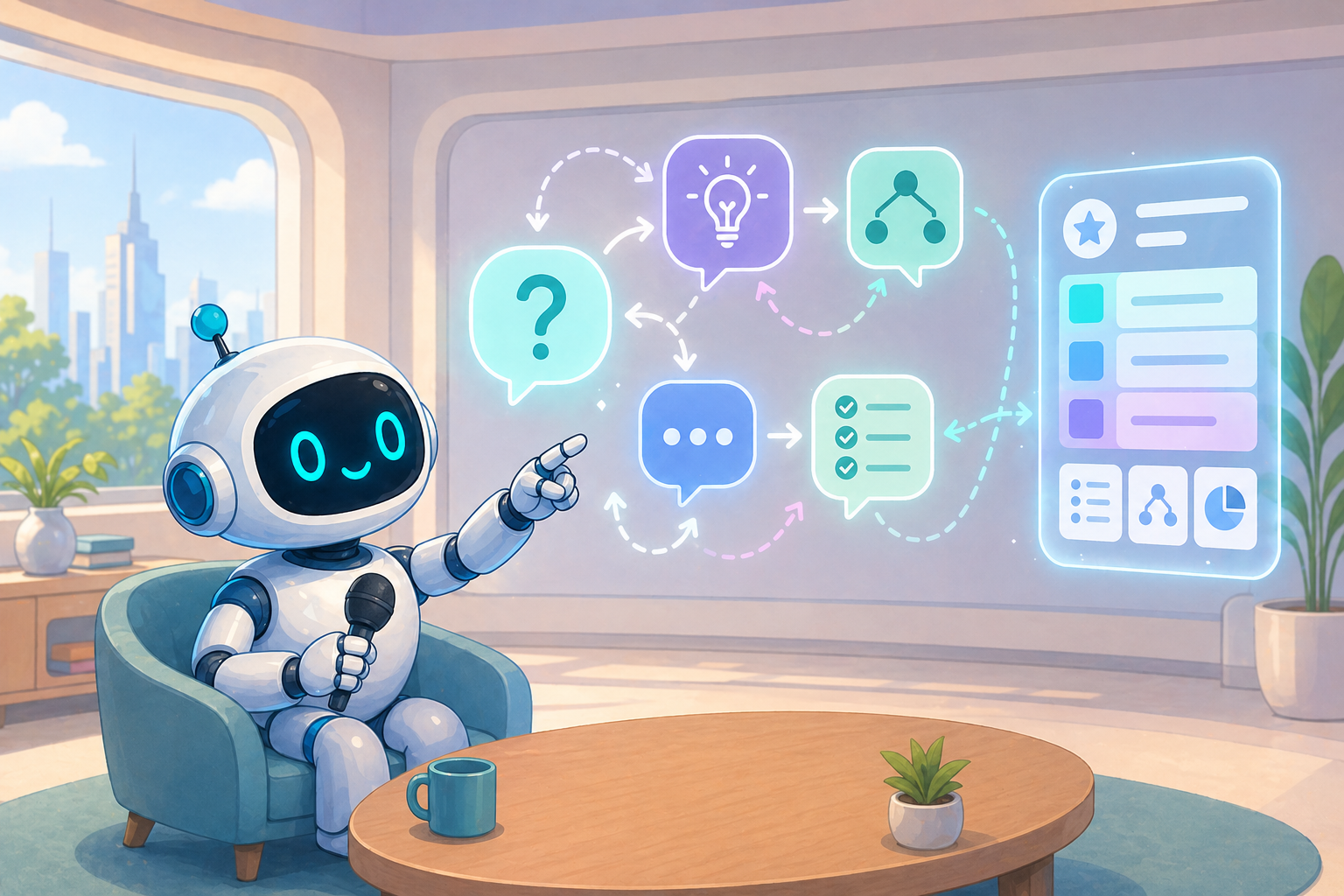
<figure>
  <img src="/images/interview.png" alt="A model interviewing the user one question at a time" />
  <figcaption>Let the model interview you when you're stuck.</figcaption>
</figure>

<p>This is my favorite use case. I face the blank page. I have a vague idea of what I want to say. I can’t quite get started. So I ask the model to interview me about the topic, one question at a time, and I just keep responding.</p>

<p>There’s a slightly odd psychology to this. I don’t strictly need the model. I could open a document and start typing. But the model is conversational, and I feel pulled to respond. But more than that, the model is responsive. It asks reasonable next questions. It surfaces gaps in what I’ve said. It probes when I’m vague. It adjusts as my thinking develops. After 30 to 60 minutes of back-and-forth, I’ve generated far more raw thinking than I would have on my own.</p>

<p>When I’m done, I ask the model for an artifact: a summary, an outline, or a transcript. The full conversation is preserved in the chat, so the model can draw on everything we covered to synthesize something I can build from.</p>

<p>I used this approach to develop an entire course on AI last year. There’s no textbook for the topic and no syllabus to crib from. So for each lecture, I asked Claude to interview me. It would start with something like “what’s the key thing you want students to leave with?” and we’d go from there. Maybe for an hour. It would ask follow-ups. It would surface gaps. It would ask how I defined a term or ask for an example. At the end, I’d ask for a structured outline and I’d draft slides from that.</p>

<p>I almost certainly did <em>more</em> work this way than if I’d just asked the model to “write me a lecture on prompting.” But the lecture was in my voice. It hit the points I cared about. It reflected my actual thinking. The interaction was the point. The outline was just documentation.</p>

<p>The same pattern works for the early stages of a paper or grant proposal. You have a sense of the contribution but you can’t quite name it. Paste in your notes, the relevant literature, or a rough abstract, and ask the model to interview you about the argument you want to make. Twenty minutes of back-and-forth often turns a fuzzy intuition into a sharper idea because you’re forced to write through it. Ask for a summary at the end and use it as scaffolding for the draft. You did the thinking. The model just gave you a structured way to surface it.</p>

<h3 id="a-few-other-modes">A few other modes</h3>

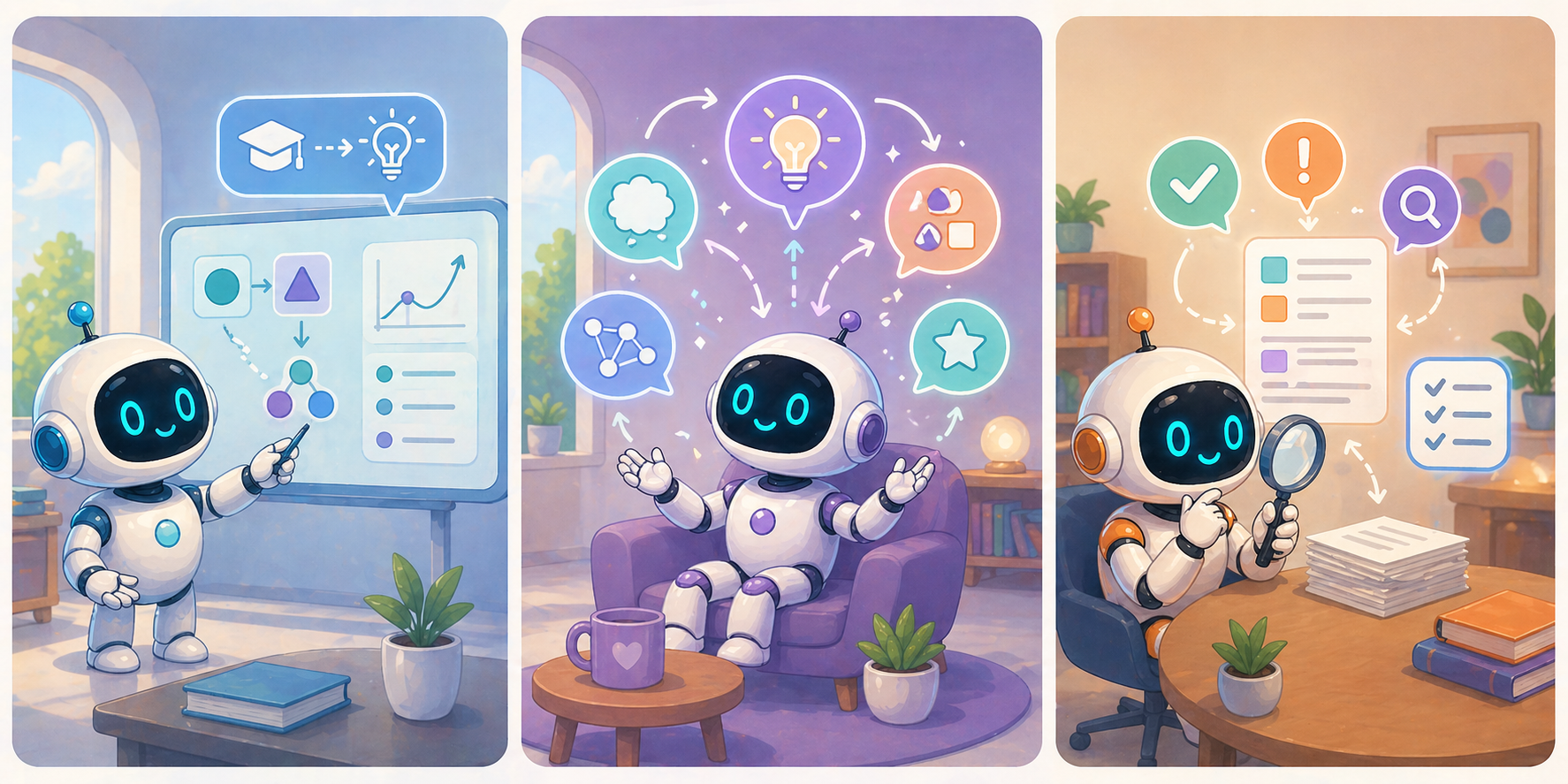
<p>You aren’t limited to delegation and interview. Three other patterns I use:</p>

<figure>
  <img src="/images/three-roles.png" alt="Tutor, brainstormer, and reviewer roles" />
  <figcaption>Three other roles the model can play.</figcaption>
</figure>

<ul>
  <li><strong>Tutor.</strong> “Explain difference-in-differences. I know regression but not causal inference. Start with intuition, then formalism.”<sup id="fnref:2" role="doc-noteref"><a href="#fn:2" class="footnote" rel="footnote">2</a></sup></li>
  <li><strong>Brainstormer.</strong> “Give me 10 possible structures for a final project in my methods course. We can narrow from there.”</li>
  <li><strong>Reviewer.</strong> “Here is my abstract. What is unclear? Where am I being vague? Be specific and blunt. Imagine you are a hostile second reviewer.”</li>
</ul>

<p>The model, by default, wants to be a helpful assistant. The labs that build these tools want them to be delegation machines because that’s the most obvious value proposition. But the models are very steerable. The only real limit on how you use them is your imagination.</p>

<h2 id="takeaways">Takeaways</h2>

<p>Three skills, briefly:</p>

<ul>
  <li><strong>Prompting</strong> isn’t a magic spell. It’s clear communication. If you aren’t confident a smart RA could accomplish the task from the prompt, the model probably can’t either.</li>
  <li><strong>Context</strong> is about balance. Provide what’s needed. Prune what isn’t. Long chats produce worse outputs than short, focused ones.</li>
  <li><strong>Conversation</strong> is iteration. Your reaction to model outputs is the best data you have for improving the next turn.</li>
</ul>

<p>The models aren’t psychic. They won’t infer what you want from a vague prompt. And they won’t magically clean up after a sprawling conversation. But they are responsive to clear instructions and active steering. Most of the difference between frustrating and useful AI use is on your side of the keyboard.</p>

<p>Sure, you can ask anything. But the first step is getting clear on what you actually want to ask for. And if you aren’t sure…the model can help with that too.</p>

<div class="footnotes" role="doc-endnotes">
  <ol>
    <li id="fn:1" role="doc-endnote">
      <p>Most major AI tools have memory features and custom instructions that try to carry some information across chats. But these are imperfect. If you start a new chat and say “let’s keep talking about my presidency class,” the model doesn’t really know what you mean. The memory features will get better over time. But for now, don’t rely on them for anything load-bearing. <a href="#fnref:1" class="reversefootnote" role="doc-backlink">&#8617;</a></p>
    </li>
    <li id="fn:2" role="doc-endnote">
      <p>I tutor 11th-grade math, and I’ve refreshed a fair amount of my own trig with ChatGPT’s help. <a href="#fnref:2" class="reversefootnote" role="doc-backlink">&#8617;</a></p>
    </li>
  </ol>
</div>]]></content><author><name>Benjamin Noble</name><email>b2noble@ucsd.edu</email></author><summary type="html"><![CDATA[Three foundational skills for working with LLMs and how to use them effectively.]]></summary></entry><entry><title type="html">Six AI Applications Every Academic Should Try</title><link href="https://benjaminnoble.org/blog/six-ai-applications" rel="alternate" type="text/html" title="Six AI Applications Every Academic Should Try" /><published>2025-07-19T00:00:00-07:00</published><updated>2025-07-19T00:00:00-07:00</updated><id>https://benjaminnoble.org/blog/use-ai</id><content type="html" xml:base="https://benjaminnoble.org/blog/six-ai-applications"><![CDATA[<p><img src="/images/use-ai-head.png" alt="Illustration of a researcher in a library interacting with glowing digital screens displaying charts, code, and documents" /></p>

<p>Academics are not early adopters.</p>

<p>Sure, we have computers and e-books and email. But are we really that different from our medieval predecessors—reading and writing books, challenging one another’s evidentiary claims in the seminar room, sharing knowledge with students in large auditoriums? We tend to adopt technologies that make our lives easier (digital articles, statistical software) but resist that those that threaten the core elements of our job (recording lectures, online courses, Wikipedia).</p>

<p>So when it comes to AI, I understand why academics are resistant.</p>

<p>Yes, it can make our lives easier. But it’s also the one technology that most directly threatens our roles as knowledge producers and educators.</p>

<p>Maybe you’re rolling your eyes right now. How could AI possibly replace us? Perhaps you, like some of the scholars I’ve talked to, view AI with skepticism. You argue that these tools are ineffective. The applications are unnecessary. LLMs hallucinate fake sources. They write code that any undergraduate with an internet connection could produce. They consume a bottle of water just to draft a quick email to your department chair. What a waste of time.</p>

<p>Or maybe you’re shaking your head. Maybe you are like some academics who view AI with disgust. Perhaps you feel LLMs are plagiarism machines that devalue academic rigor. They rob us of our creativity and our patience for critical thinking. To take advantage of these tools is to admit that we, as researchers and educators, add no more value than an unthinking computer that can do matrix multiplication with words.</p>

<p>If you fall into one one of these camps, you are missing something important. While these criticisms are sometimes accurate, they also stem from a misunderstanding of how to use these tools, not from a limitation of the technology itself. And I get it. Unlike almost any other technological innovation, AI doesn’t come with an instruction manual. LLMs do not behave based on clear rules. The same input does not always yield the same output. And these tools are constantly evolving.</p>

<p>But that doesn’t mean the technology is useless.</p>

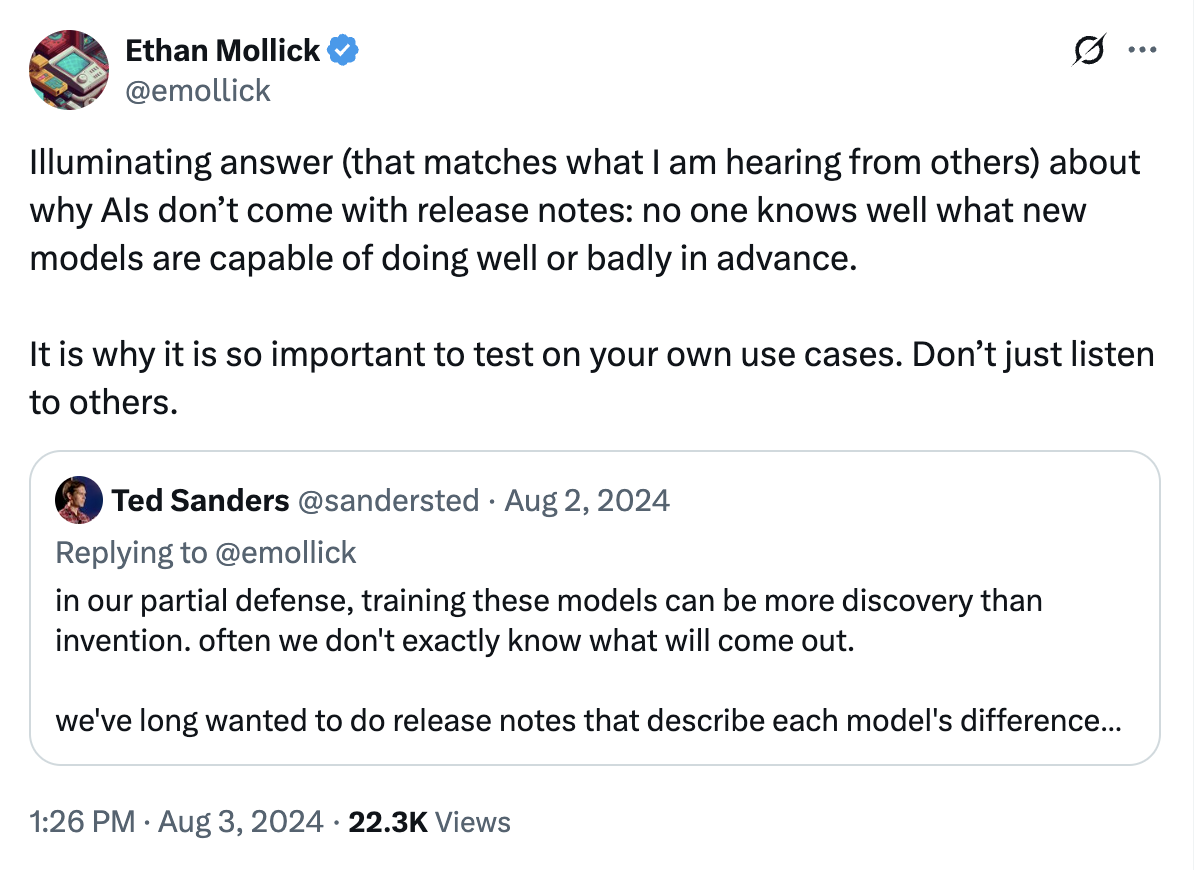
<p>As Professor Ethan Mollick wrote on X last year, the best way to understand what this technology is capable of, and how it can be of use to you, is to see what others are doing with it and to experiment yourself. That’s what I aim to do here.</p>

<p><img src="/images/mollick-tweet.png" alt="Screenshot of a post by Ethan Mollick on X emphasizing the importance of testing AI on your own use cases rather than relying on others' experiences" /></p>

<p>After learning more about this technology, experimenting with these tools, and prepping a course on integrating AI into the research process, I have identified six different ways AI has benefited my research and teaching. These range from obvious insights to advanced applications, and they’re use cases you can experiment with today. As I’ll show, they complement rather than substitute for my core skills, and they have required me to think more carefully, not less.</p>

<h2 id="research">Research</h2>

<h3 id="debugging-code-obvious">Debugging Code (Obvious)</h3>

<p>Not too long ago, I was a fresh-faced graduate student trying to <code class="language-plaintext highlighter-rouge">mutate()</code> my first variable in <code class="language-plaintext highlighter-rouge">R</code>. I remember clicking through stackoverflow, puzzling over the differences between the correct solution and my busted code.</p>

<p>But those days are over. My own undergraduate and graduate students will miss out on this experience (just as I missed out on my senior colleagues’ trips to the mainframe to run their regressions). Now, I copy and paste my error messages into ChatGPT and get a perfectly tailored solution in seconds.</p>

<p>This is low effort, and often low reward. But low rewards compound. As a political scientist, my job isn’t to be the world’s most knowledgeable coder—it’s to publish impactful research. By quickly solving bugs, I can get back to what matters.</p>

<h3 id="synthesizing-bodies-of-literature-ambitious">Synthesizing Bodies of Literature (Ambitious)</h3>

<p>When ChatGPT first blew up in early 2023, I asked it about the major citations in my own research area. It failed miserably. Some of the authors were real, but the books and articles were completely fabricated. It was apparent that these models, while good at generating text, were not good at information retrieval. Which was frustrating. If only these models could identify and summarize actual sources, they would be especially useful in the early stages of project planning and literature sourcing.</p>

<p>With the advent of “deep research,” that’s changed. Using this feature, an LLM will “think” for ten or twenty minutes. It will search the web for answers. And when it finishes, you’ll have a high-level, 4,000 word report summarizing the literature. The actual literature.</p>

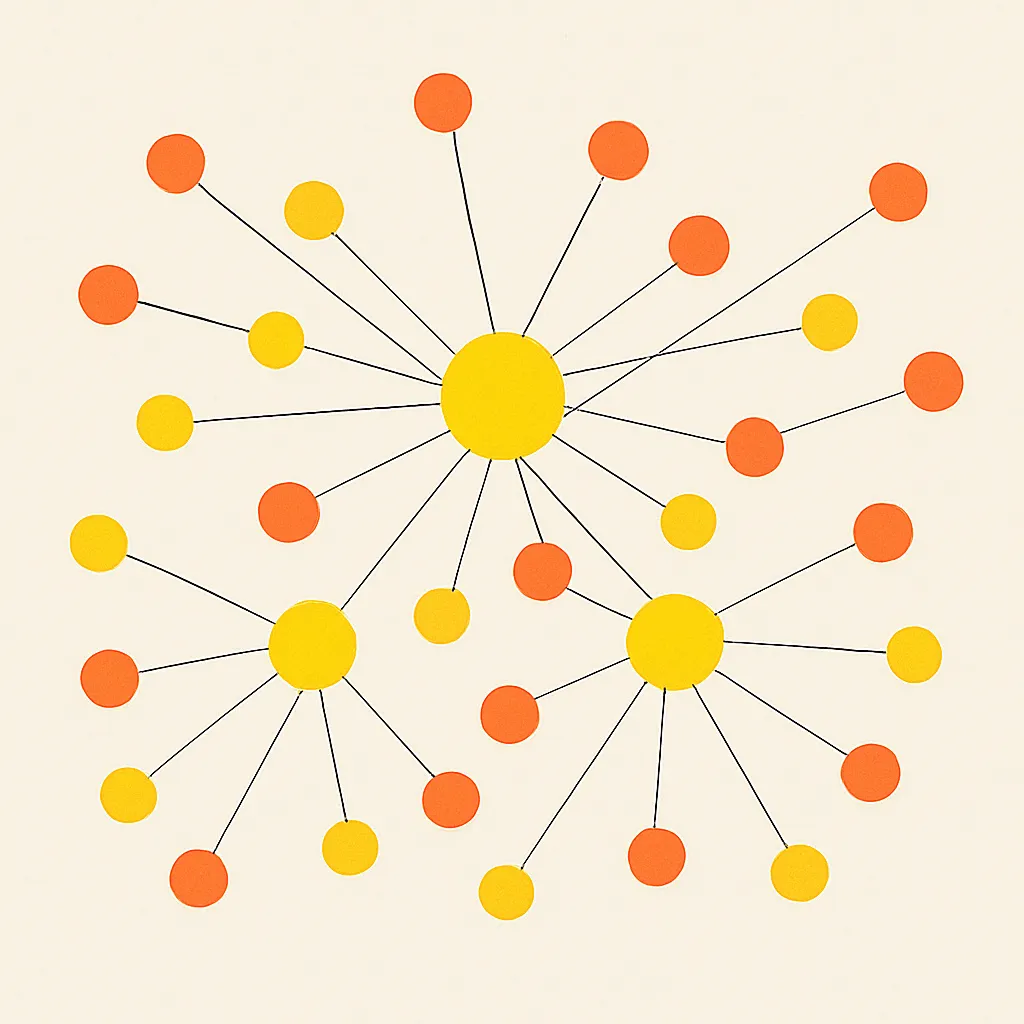
<p><img src="/images/network.webp" alt="Network diagram with a central node connected to many smaller nodes, representing how AI deep research connects related sources across a body of literature" /></p>

<p>Now, the point isn’t to have the LLM do the work for me. I don’t copy and paste the content into my Overleaf file. Rather, these deep research reports scaffold deeper investigation. Getting this rapid synthesis allows me to step back, orient myself, ask better questions, identify gaps, and figure out what to read next.</p>

<h3 id="getting-critical-feedback-advanced">Getting Critical Feedback (Advanced)</h3>

<p>If you think the seminar room is tough, try asking ChatGPT for feedback on your talk.</p>

<p>A few months ago, I was scheduled to give a 30 minute research talk to a non-specialist audience. Although I was excited about the opportunity, I was unsure if I had effectively blended academic rigor with approachable storytelling appropriate for this audience.</p>

<p>When I finished what I thought was a solid first draft, I recorded a practice run and shared it with ChatGPT. Two minutes later, it provided a 2,000 word review highlighting strengths, but also detailing structural issues, technical jargon, and recommendations for a smoother presentation. I was shocked. Not only because I consider myself a skilled presenter, but because many (maybe 60%?) of these suggestions were good. They were the kinds of things a colleague would have noted had I asked them for feedback.</p>

<p>What about the other 40%? Since it’s just you and me here, I’ll admit: they kind of sucked. Some of the feedback suggested I remove humorous asides. And worse, some of the suggestions seemed to hinge on revising slides that didn’t exist.</p>

<p>At this point, I know many people will roll their eyes. Why waste time with a tool that gives feedback on hallucinated slides? What a joke, right?</p>

<p>This is where critical thinking and flexibility are essential. Consider the last time you got a good journal review or that a colleague gave you feedback on a paper. What percentage of their suggestions were helpful? How many did you implement? I doubt you agreed with 100% of what they suggested, and yet, you still valued their input. Similarly, I trust myself to recognize good and bad feedback. AI doesn’t have to have a 100% success rate to be valuable or improve my work. An all-or-nothing approach helps no one.</p>

<h2 id="teaching">Teaching</h2>

<h3 id="designing-images-for-slides-obvious">Designing Images for Slides (Obvious)</h3>

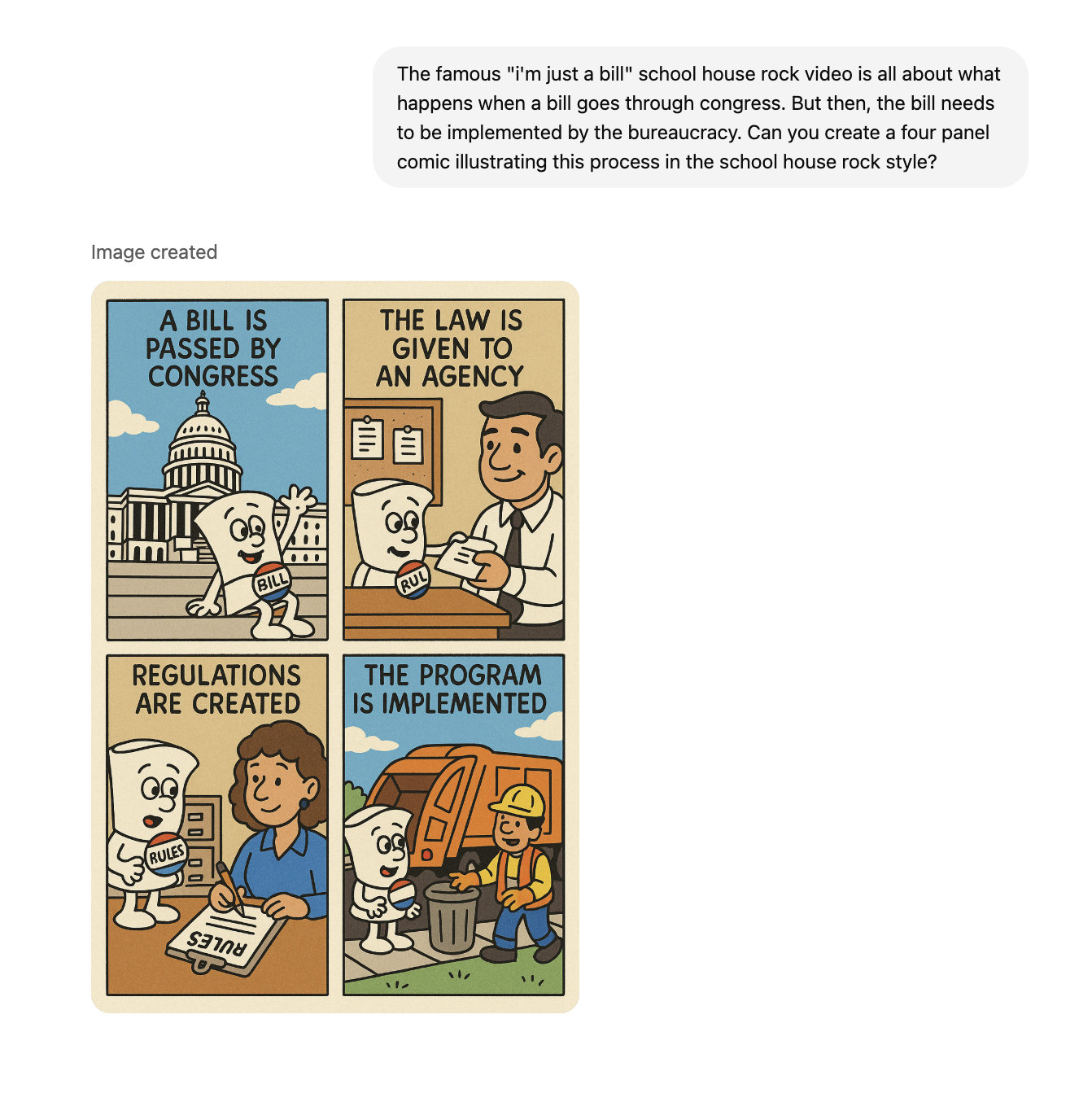
<p>ChatGPT’s image generation tools aren’t just for turning your family photos into Miyazaki memes. I use these tools regularly to create fun and interesting images for undergraduate slides. Like this one, where I asked ChatGPT for a version of “I’m just a bill,” but for the bureaucracy.</p>

<p><img src="/images/just-a-rule.png" alt="AI-generated four-panel comic in Schoolhouse Rock style showing how a bill becomes a regulation: a bill is passed by Congress, the law is given to an agency, regulations are created, and the program is implemented" /></p>

<p>AI image generation isn’t (in my experience) fine-tuned enough to replace a talented, human artist. But the alternative here isn’t hiring a professional designer. It’s black text on a white background. Adding AI images makes the content more memorable, keeps lecture writing fun, and occasionally elicits a chuckle from tough undergraduate audiences.</p>

<h3 id="creating-exam-questions-ambitious">Creating Exam Questions (Ambitious)</h3>

<p>Way back in the AI dark ages (March 2024), I was writing an open-book, multiple choice final for my undergraduate causal inference course. Then, a colleague stopped by to ask if ChatGPT could answer the questions.</p>

<p>As it turns out, ChatGPT got every answer right. And it provided in-depth (and factually accurate) explanations about why the correct answer was correct and why the wrong answers were wrong.</p>

<p>I closed the Word document and decided to come up with a new plan.</p>

<p>The new exam would no longer be multiple choice. It would no longer focus on factual information. Instead, students would need to analyze data, set up RDD and IV equations, and interpret the results. AI could also hack this exam, but doing so was challenging, and I was more confident in my ability to detect AI copy-paste if students had to provide written responses.</p>

<p>The new problem was finding suitable data. Replication datasets were too large, had too many variables, and often required modifications to conform to a classic causal design.</p>

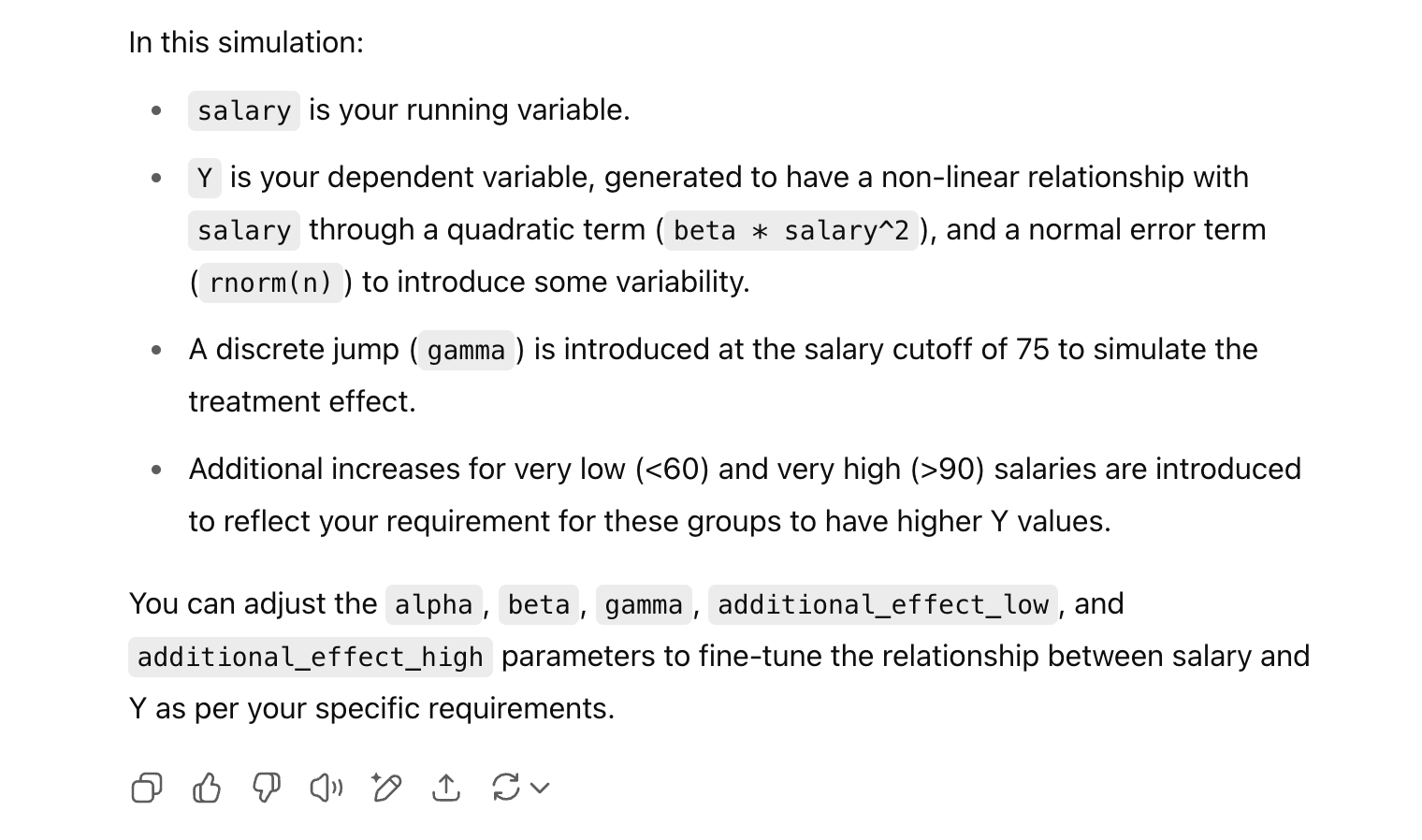
<p>Simulation was the obvious answer. But I was running out of time. Fortunately, ChatGPT excels at creating data with specific properties. I described what I wanted in a single paragraph, and moments later, I had the <code class="language-plaintext highlighter-rouge">R</code> code I needed. That freed me to focus on where I actually add value: designing thoughtful questions that test students’ understanding.</p>

<p><img src="/images/data-sim.png" alt="Screenshot of ChatGPT output describing parameters for simulating regression discontinuity data, including a running variable, quadratic relationship, and treatment cutoff" /></p>

<h3 id="writing-a-custom-textbook-advanced">Writing a Custom Textbook (Advanced)</h3>

<p>No textbook is perfectly aligned with my teaching goals.</p>

<p>But how could one be? That’s asking too much. Or is it?</p>

<p>That’s the question I asked myself last quarter. And the answer is that, in the age of AI, writing a custom textbook is not only possible, it’s almost practical.</p>

<p>When I started teaching Intro to American Politics in the fall of 2023, I wrote detailed lecture notes to accompany my slides. Each time I taught the course, I updated slides. Added content. Changed the focus. And I kept revising my notes. But these were for personal use. They were rough, sloppy, and unprofessional.</p>

<p>If I could polish these notes and give them to students, I’d solve my textbook problem. But doing so seemed daunting and time-consuming.</p>

<p>Enter Claude.</p>

<p>Over a weekend, I developed a custom prompt to transform lecture notes into polished, readable textbook-style chapters for an undergraduate audience. Then, I gave the LLM my notes and asked it to go to work.</p>

<p>Importantly, I didn’t ask for content creation—I had already written everything using my own knowledge and insight. Claude was simply my translator.</p>

<p>I then carefully reviewed the output for hallucinations or factual errors the model may have introduced (there were rarely any, by the way). I extended some of the content, added images, and inserted some jokes. This process took about two hours per chapter. Not a trivial amount of work, but far less than if I had tried to write a 60,000 word book myself! Then, I posted everything online.</p>

<p>The result was a custom textbook, perfectly aligned with my lecture slides.</p>

<p><img src="/images/uap-mockup.png" alt="Laptop displaying the Understanding American Politics online textbook on Substack" /></p>

<p><em>Students loved this by the way—in my spring course evals, 89% of respondents said they preferred it to a standard textbook. If you want to check it out or consider using it for your Intro to American Politics Course, you can <a href="https://understandingamericanpolitics.substack.com/">check it out here</a> for free. I’d love to know what you think.</em></p>

<p>The AI didn’t create content for me. Rather, the AI took what already existed (messy lecture notes) and enabled me to create a custom, high-quality, student facing resource that I can update and use again and again.</p>

<h2 id="conclusion">Conclusion</h2>

<p>Are there thoughtless uses of AI that are unnecessary? Yes. Are there lazy applications that impair our ability to think critically? Absolutely.</p>

<p>But that doesn’t mean all use cases fall into these two buckets. There are positive use cases for this technology—use cases that may not be obvious at first, but that are both useful and even enhance critical thinking.</p>

<p>In none of these examples does AI “replace” me, my knowledge, or my labor. None of these examples involve me uncritically copying and pasting AI output. In every case, I apply my own judgement, taste, and subject matter expertise to achieve outcomes that would be impractical or impossible without AI assistance.</p>

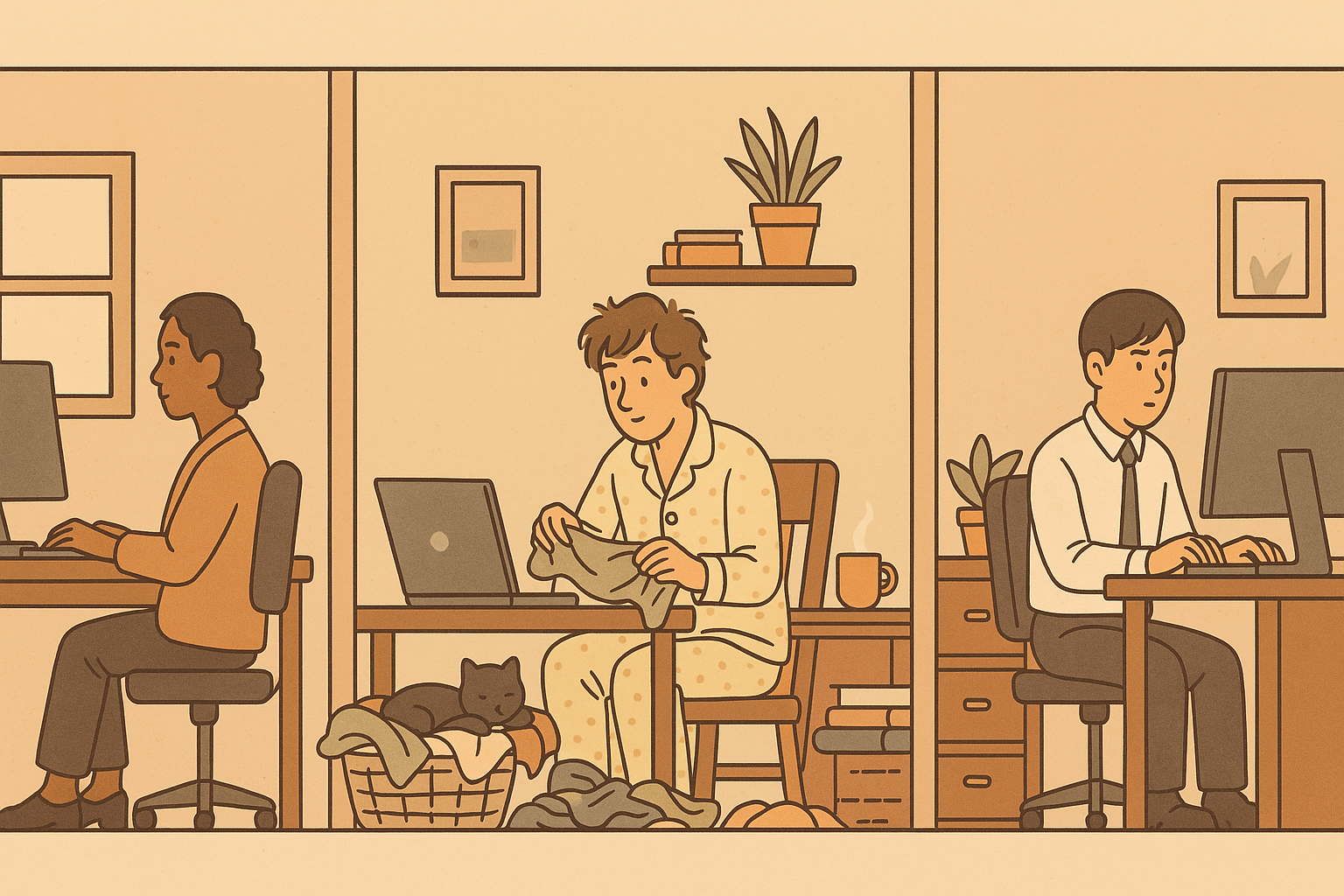
<p>If AI can help preserve our bandwidth for important, engaging work while helping us do that work better, the real threat to critical thinking isn’t AI—it’s refusing to critically engage with it at all.</p>]]></content><author><name>Benjamin Noble</name><email>b2noble@ucsd.edu</email></author><summary type="html"><![CDATA[From debugging code to synthesizing literature to creating a custom textbook, these applications complement rather than substitute for critical thinking.]]></summary></entry><entry><title type="html">Just Treat It Like a 9 to 5 Job and Everything Else Will (Probably) Follow</title><link href="https://benjaminnoble.org/blog/9to5" rel="alternate" type="text/html" title="Just Treat It Like a 9 to 5 Job and Everything Else Will (Probably) Follow" /><published>2025-04-13T00:00:00-07:00</published><updated>2025-04-13T00:00:00-07:00</updated><id>https://benjaminnoble.org/blog/9to5</id><content type="html" xml:base="https://benjaminnoble.org/blog/9to5"><![CDATA[<p><img src="/images/9to5-head.png" alt="Illustration of three people at desks: two working at computers while a third sits in pajamas, contrasting structured and unstructured work habits" />
<!-- <p align="center">
    <figcaption style="font-family: inherit; color: grey; text-align: center;"><p>(Dall*E's interpretation of a PhD student making a website.)</p></figcaption>
</p> --></p>

<p>How do you get a tenure track job?</p>

<p>How do you get tenure?</p>

<p>How do you get to full professor?</p>

<p>The answer is obvious: write. And publish.</p>

<p>How do you write and publish?</p>

<p>That answer is also obvious: sit down at your computer, open a blank document, and start typing.</p>

<p>Even if the answer is obvious, doing it is not. For starters, “typing” won’t cut it.<sup id="fnref:1" role="doc-noteref"><a href="#fn:1" class="footnote" rel="footnote">1</a></sup> You need to come up with good ideas, read the literature, collect and analyze data, write a persuasive argument. The list goes on.</p>

<p>These are difficult tasks. And there is no formula for doing these tasks consistently and at a high level.</p>

<p>For that reason, I (and many others) write blogs like this with advice on <a href="https://benjaminnoble.org/blog/more-ideas">how to have more ideas</a>, <a href="https://benjaminnoble.org/blog/reading">how to read more efficiently</a>, and how to <a href="https://benjaminnoble.org/blog/time-blocking">organize your time effectively</a>. Or, sometimes, just the opposite. How to take breaks, avoid burnout, and make time for yourself.<sup id="fnref:2" role="doc-noteref"><a href="#fn:2" class="footnote" rel="footnote">2</a></sup></p>

<p>I (and many others) read blogs like this because we are searching for the “one weird trick” that is magically going to destroy distractions, give us writing superpowers, and finally help us finish that article we’ve been avoiding—all while having time to pursue our hobbies, maintain important relationships, and live life.</p>

<p>After years of being one of those blog readers, I’ve stumbled upon many of these “one weird tricks,” like:</p>

<ul>
  <li><a href="https://benjaminnoble.org/blog/time-blocking">Time blocking</a>.</li>
  <li><a href="https://todoist.com/productivity-methods/eat-the-frog">Eating the frog</a>.</li>
  <li>The <a href="https://todoist.com/productivity-methods/pomodoro-technique">pomodoro</a> method.</li>
  <li>Creating a writing group.</li>
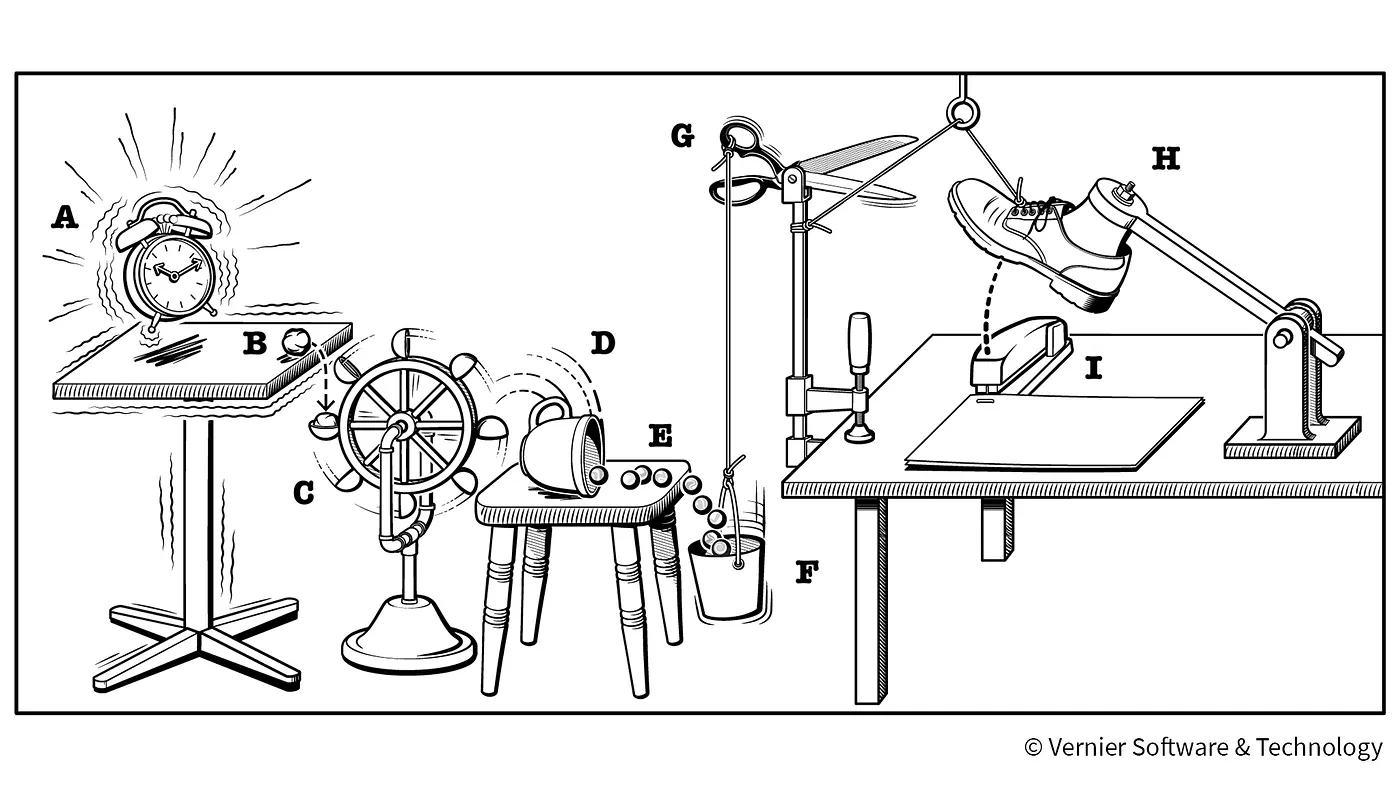
  <li>Some sort of Rube Goldberg productivity system involving this cool new app that will definitely, totally work this time and that you definitely, totally won’t abandon after you spend all of today and most of tomorrow setting it up (all while avoiding your actual work).</li>
</ul>

<p><img src="https://miro.medium.com/v2/resize:fit:1400/format:webp/1*UXeSA9hDKfUEfw4cE2pIpA.png" alt="Diagram of a Rube Goldberg machine with labeled components connected in an elaborate chain reaction" /></p>

<p>Now, I don’t want to sit here and say these “one weird tricks” don’t work. I have used, and still use, many of them. But consider how many “one weird tricks” you can find on the internet. And how you’re still looking for the “one weird trick” to rule them all. And how you’re reading this article right now. The simple fact that we’re all still searching suggests that none of these “one weird tricks” actually solve the core problem. They never help us maintain the work-life balance we’re seeking.</p>

<p>As I, myself, was reading about the latest “one weird trick” something hit me. What if all of these “one weird tricks” are downstream of a “one weird trick” that actually works. A “one weird trick” so boring, so unappealing, so un-sexy, that no one ever stopped to think that it might be a “one weird trick” at all.</p>

<p>Until now. Until I was brave enough to do it!</p>

<p>So what is the secret to productivity?</p>

<p>Pretend you work a 9-5 job.</p>

<h2 id="before-academia-i-worked-a-9-5">Before academia, I worked a 9-5</h2>

<p>For five years between undergrad and grad school, I worked in advertising. I was a writer. I wrote scripts for TV and radio commercials, copy for websites, and headlines on billboards. In the beginning, advertising was a fun, creative, and challenging career. But there was one problem: every weekday, Monday through Friday, I had to wake up early, go to an office, and sit there from 9am to 5pm.</p>

<p>Looking back, the job wasn’t so different from what we do as academics. I had to come up with novel and creative ideas. I had to write those ideas down. I had to present my work to internal and external stakeholders who would review it and give me feedback. I had to revise my work based on that feedback. I had to re-present that work. Often, I had to do all of this while working with a small team of 1-3 other people.</p>

<p>But there were a few key differences. Some are particularly relevant here: if I did not sit down at my desk and write, I would get in trouble. If I did not make the revisions on time, I would get in trouble. If it was summer and it was a really nice day and things were slow and I decided I didn’t feel like working and I went to the park instead, I would get in trouble. If it was really busy and I was juggling a lot of projects and the emails were piling up and the election was, like, five weeks away and I really just couldn’t and I took the day off—even then—I would get in trouble!</p>

<p><img src="https://uploads.dailydot.com/2024/08/right-to-jail-1.gif?auto=compress&amp;fm=gif" alt="Right to jail meme from Parks and Recreation" /></p>

<p>So what did I do?</p>

<p>Obviously, I quit and became an academic.</p>

<p>But for five years…I went and sat down at my desk from 9-5, Monday through Friday. And I wrote. Because I don’t like getting in trouble.</p>

<h2 id="the-autonomy-tax">The Autonomy Tax</h2>

<p>Now, fortunately, I make my own decisions. I get to choose what to write and when to write it—or even, whether to write at all. And guess what, I don’t ever get in trouble!</p>

<p>But this autonomy, this “not getting in trouble,” it’s not quite what it seems.</p>

<p><img src="https://uploads.dailydot.com/2023/12/its-a-trap-meme.jpg?q=65&amp;auto=format&amp;w=800&amp;ar=2:1&amp;fit=crop" alt="Admiral Ackbar &quot;It's a trap&quot; meme from Star Wars" /></p>

<p>With autonomy comes extreme responsibility.</p>

<p>Yes, it’s awesome that no one will tell you what to work on, when to work, where to work, or when to turn in your work. But there are some downsides too. Like…no one will tell you what to work on, when to work, where to work, or when to turn in your work. You have to tell yourself that. And then you have to follow through.</p>

<p>But following through is hard, because writing is hard. And doing basically anything else is easier.</p>

<p>The autonomy tax is this: when you wake up in the morning, you have options. You could clean your data, or compile code, or write your introduction, or read some articles, or start a new project. Or, you could fold your laundry, or clean your oven, or go to the beach, or call your mom, or go to the DMV, or lie on the floor and stare at the ceiling. I know what I would choose. Because writing is hard.</p>

<p>Every time you have to engage in this kind of decision-making, you are taxing a finite resource: your cognitive capacity. And this mental energy is exactly what you should be using to think about your theoretical arguments or data sources or analytical approaches—not whether you should or shouldn’t be working in the first place.</p>

<h2 id="the-one-weird-trick-to-rule-them-all">The “one weird trick” to rule them all</h2>

<p>Thinking back on my time in advertising, one (not so) strange fact is that I <em>never</em> called my mom or folded my laundry in the middle of the day. Not because my preferences changed. But because if I wasn’t at my desk writing, I would get in trouble.</p>

<p>If you are struggling to get work done and “one weird tricks” aren’t working, it might be because you’re viewing your work as a thing you <em>could</em> do rather than the thing you <em>should</em> do. Because, after all, you won’t get in trouble if you fold your laundry or call your mom or even bake cookies. And you can always work tomorrow. You’ll be better rested. More inspired. Less stressed.</p>

<p>And if that is your mindset, no pomodoro method or time blocking or Rube Goldberg-ian system will help you. Because you won’t be at your desk to even apply them.</p>

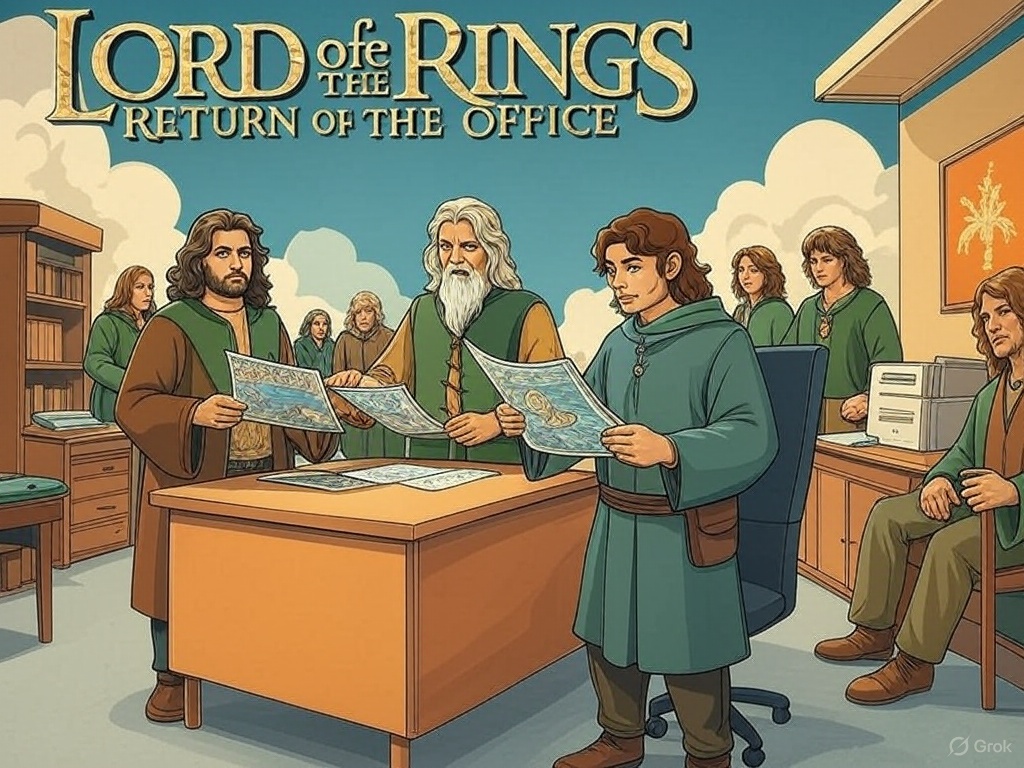
<p>The “one weird trick” is this: cultivate a lifestyle where you don’t have to make these choices. Where you don’t think about folding laundry or calling your mom or baking cookies in the middle of the day. Where you don’t have to make these hard choices where writing is destined to lose. Where you wake up every weekday, Monday through Friday, and you sit at your desk and write. In short, simply take all of the freedom and flexibility afford by an academic job and set it on fire.</p>

<p><img src="/images/lotr-office.jpg" alt="AI-generated illustration titled Lord of the Rings: Return of the Office, showing hobbits and fantasy characters working in an office setting" /></p>

<p>By removing the recurrent question of “should I work now,” and simply defaulting to 9 to 5, you can conserve your mental bandwidth for the thinking that actually matters.</p>

<h2 id="what-do-you-get-in-exchange-for-working-9-5-freedom-from-5-9">What do you get in exchange for working 9-5? Freedom from 5-9.</h2>

<p>Ok, I admit, it’s starting to sound a little toxic. I’ve mostly just lectured you about working 40 hours a week (which to be fair, I do believe will help you be more productive) without giving you anything in return.</p>

<p>But you do get something in return.</p>

<p>When I worked in advertising, it’s true, I couldn’t go to the beach at 2pm because I felt like it. But at 7pm, I can assure you, I was not thinking about my job. I never felt guilty for reading fiction, or playing video games, or hanging out with friends. There was never that feeling of “oh, I should be working right now.” There was no ambient and ever-present guilt. Work wasn’t my problem…at least until tomorrow at 9am. And at that point, I knew I would have eight dedicated hours to deal with it.</p>

<p>Many academics struggle with feelings of guilt, constantly questioning if they have done enough. If they can allow themselves to be “done” for the day. It’s easy to feel this way when you don’t set clear boundaries between work and play. When every minute is a choice between working or relaxing, of course you feel bad when you choose relaxation. You could have chosen work!</p>

<p>When you establish a consistent 9-5 routine though, you’re never faced with this choice. You simply look at the clock. If it’s between 9am and 5pm, you work. If it’s not, you don’t. You never have to feel bad about what you <em>should</em> be doing, because you’re already doing it!</p>

<h2 id="how-to-work-a-9-5-job">How to work a 9-5 job.</h2>

<p>Some people don’t know how to work a 9-5 job. So finally, we get to the practical advice from my wealth of experience. Here’s how you do it:</p>

<p>You wake up with enough time to do whatever it is you need to do in the morning (work out, eat breakfast, read the news, take your children to school, walk your dog, etc). At 9am, you sit down in front of your computer and start working. Take a short break to check social media or walk. Around noon, take 30 minutes for lunch. Then, sit back down at your computer. Maybe one or two more short breaks. At 5pm, close your laptop.</p>

<p>At 5:01, bake, watch TV, walk your dog, call your mom, go to the beach, go out to dinner, play video games. And don’t think about work! The world is your oyster.</p>

<p>Repeat, five days a week, fifty-two weeks a year—excluding major holidays, vacations, and sick days—until you get [an academic job, tenure, full professor, an APSA career achievement award].</p>

<h2 id="maybe-you-still-have-some-questions">Maybe you still have some questions…</h2>

<p>Q: What should I do if I don’t feel like writing today?</p>

<p>A: Sit at your desk from 9am to 5pm and write.</p>

<p>Q: What if I am stressed about the election?</p>

<p>A: Sit at your desk from 9am to 5pm and write.</p>

<p>Q: What if I am tired?</p>

<p>A: Sit at your desk from 9am to 5pm and write.</p>

<p>Q: What should I actually do while I “sit at my desk from 9am to 5pm?”</p>

<p>A: Most importantly, “write.” Whether that is the actual text of a book or article. Code. Collect data. Mentor students. Prep courses. Teach courses. Read relevant literature. Answer emails (sparingly). Attend talks. Do service.</p>

<p>Academia is not just one thing. It’s a collection of different roles and responsibilities, all of which count as “work.” Different engagements, and interruptions that fragment your workday. This reality makes boundaries more essential—not less. Writing, teaching, mentoring, service, and administrative work all “count” and fall within these working hours.</p>

<p>When your lecture ends at 2, you return to your desk and analyze data or prepare another lecture or email a coauthor rather than disassociate on instagram for an hour and go home with some vague intention to “work tonight.” When you have odd breaks between committee and student meetings, you use that time to respond to emails or read an article rather than doom scroll.</p>

<p>Q: What if I need to go to the doctor or the DMV? What if I’m sick?</p>

<p>A: Just like people with actual 9-5 jobs, take time off to do necessary errands or take care of yourself. But don’t take advantage of your flexibility. Sick days and dental appointments are essential; going to Walmart to pick up supplies for your Halloween costume is not. If you’re not sure, ask yourself: what would one of your 9-5 friends say if you told them how you were spending your work day? Would they be jealous? If so, you probably shouldn’t be doing it!</p>

<p>Q: What if I can’t be creative on demand? What if I need inspiration to write—which may or may not come between 9-5?</p>

<p>A: The author Somerset Maugham once wrote:</p>

<blockquote>
  <p>“I write only when inspiration strikes. Fortunately it strikes every morning at nine o’clock sharp.”</p>
</blockquote>

<p>While it’s true you might get a flash of insight at 11:56pm (it’s certainly happened to me), creative work often happens due to, not in spite of, constraints. By setting aside dedicated time to work, you’re training your brain to get into the right state of mind at the right time. And you’re making space to engage in creative work, rather than leaving it to chance. Boredom is the mother of creativity. You’re much more likely to come up with innovative solutions when you’re sitting at your desk with nothing else to do than you are baking in your kitchen and listening to a true crime podcast.</p>

<p>And what’s more—the work of academia is about much more than having a brilliant idea. It’s about translating that idea into an article with theory and evidence. It’s about writing lectures and teaching and mentoring students. It’s about performing service for the department and the discipline. These things do not require flashes of insight. They require time.</p>

<h2 id="do-i-literally-have-to-work-from-9am-to-5pm-what-if-i-work-better-at-night-in-weird-two-hour-chunks-for-eighteen-straight-hours-without-a-break">Do I literally have to work from 9am to 5pm? What if I work better [at night, in weird two hour chunks, for eighteen straight hours without a break]?</h2>

<p>My main point is that you want to set dedicated blocks of uninterrupted time to work each week that are consistent and repeatable. You want to mentally categorize certain chunks of time as “working hours” so you never have to choose between work and play. Doing so eliminates the autonomy tax so that you can save mental energy for meaningful work.</p>

<p>Different people have different preferences and different working styles. The flexibility to work whenever you want is a huge draw of the career. And there is nothing innately magical about 9-5 (relative to, say, noon to 8pm). It’s not some sort of empirically validated period of maximum productivity. It’s just a socially constructed focal point that we have collectively decided is “work time.”</p>

<p>But focal points have their advantages as coordination mechanisms. Because most other people are working during this time, doing so yourself is the path of least resistance. Everyone else is working, so it’s easy to do what everyone else is doing. Your advisors and colleagues are most likely to be in the office during this time. They will be more responsive to emails. There’s less likelihood of a meeting being scheduled outside your usual working hours (e.g., at 9am if you work starting at 11am).</p>

<p>There are also fewer temptations that will pull you away from work. Most of your other friends (unless they’re also academics), aren’t going to text you at 2pm on a Wednesday to get dinner. There aren’t any concerts or comedy shows at 11am on a Thursday. No one hosts a Halloween party at 3pm on Monday. All of these things happen outside of the 9-5 window, and since you worked 9-5, you’re free to do those things when they come up. If, instead, you decide your working hours will be noon to 8pm, you will need incredible willpower to turn down your friend’s 6:30pm dinner invite. And if that is the schedule you set, you need to stick to it. Otherwise, you’re back to the world of too many choices.</p>

<h2 id="i-get-what-youre-saying-but-how-does-sitting-at-my-desk-magically-make-me-more-productive-and-successful">I get what you’re saying, but how does sitting at my desk magically make me more productive and successful?</h2>

<p>On it’s own, sitting at your desk solves nothing. But sitting at your desk gives you the time you need to solve something.</p>

<p>In my post on <a href="https://benjaminnoble.org/blog/more-ideas">having more ideas</a>, I write:</p>

<blockquote>
  <p>“Having good ideas is hard. But having bad ideas is easy.”</p>
</blockquote>

<p>Having bad ideas takes time. The same applies to writing. The best way to write a good paper is to start by <a href="https://benjaminnoble.org/blog/minimum-viable-paper">writing a bad paper</a>. But again, even writing a bad paper is hard and takes time.</p>

<p>You typically don’t have bad ideas while you’re baking or listening to podcasts or doom scrolling. You have bad ideas when you’re sitting at your desk with nothing else to do and no escape until 5pm.</p>

<hr />

<p>I thank Debora Villalvazo for helpful discussion and feedback on this post.</p>

<hr />

<div class="footnotes" role="doc-endnotes">
  <ol>
    <li id="fn:1" role="doc-endnote">
      <p>Ok sure, you may eventually write Hamlet, but probably not before you hit the job market. <a href="#fnref:1" class="reversefootnote" role="doc-backlink">&#8617;</a></p>
    </li>
    <li id="fn:2" role="doc-endnote">
      <p>Given the lack of hyperlinks…clearly, I don’t do this…but other people do! <a href="#fnref:2" class="reversefootnote" role="doc-backlink">&#8617;</a></p>
    </li>
  </ol>
</div>]]></content><author><name>Benjamin Noble</name><email>b2noble@ucsd.edu</email></author><summary type="html"><![CDATA[How trading a little autonomy for structure conserves mental energy for what really matters.]]></summary></entry><entry><title type="html">Why You Need an Academic Website</title><link href="https://benjaminnoble.org/blog/website" rel="alternate" type="text/html" title="Why You Need an Academic Website" /><published>2024-01-20T00:00:00-08:00</published><updated>2024-01-20T00:00:00-08:00</updated><id>https://benjaminnoble.org/blog/website</id><content type="html" xml:base="https://benjaminnoble.org/blog/website"><![CDATA[<hr />

<p><img src="/images/make-website-hero.jpeg" alt="Dall*E's interpretation of a PhD student making a website." /></p>
<p align="center">
    <figcaption style="font-family: inherit; color: grey; text-align: center;"><p>(Dall*E's interpretation of a PhD student making a website.)</p></figcaption>
</p>

<hr />

<p>Should graduate students (or early-career academics more broadly) have a website?</p>

<p>I guess the answer to the question was controversial given the Twitter (err…X) debate surrounding it in (checks notes) Summer 2023. I had already come to this debate late when I first decided to write this post, and like any good academic, my actual response comes even later. So late as to miss any possible benefit of joining in on the discussion…such that it is probably not even worth mentioning.</p>

<p>Alas. I am nothing if not on brand.</p>

<p>Given the title of this post, I have spoiled my own opinion on the topic and am very much a partisan warrior in this fight. <strong>I think it’s necessary for any PhD student or early career academic to have a website.</strong></p>

<p><em>Note: If you don’t need to be convinced but aren’t sure how to make a website or what to put on it, scroll to the bottom of this post for practical advice.</em></p>

<h2 id="its-2023-2024-not-1993">It’s <del>2023</del> 2024, not 1993<sup id="fnref:1" role="doc-noteref"><a href="#fn:1" class="footnote" rel="footnote">1</a></sup></h2>

<p>I was not in academia in 1993 (I was in diapers), but I am pretty sure things were different than they are today. Bill Clinton was president, it took a lot longer to run a regression, and it was easier to get an academic job.</p>

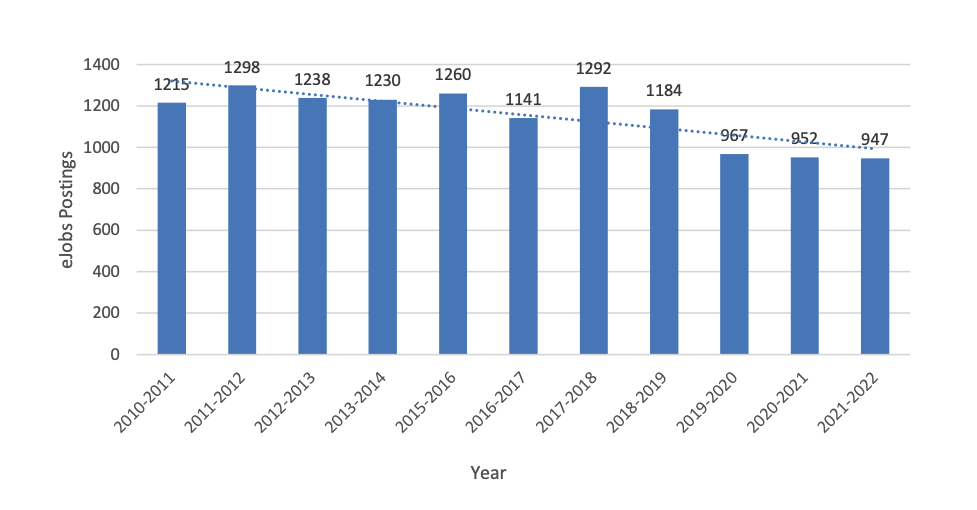
<p>Although I was not able to find time series data on the number of jobs versus number of applicants, the APSA e-jobs reports provide some insight into the decline in the raw number of tenure track jobs over time. <a href="https://preprints.apsanet.org/engage/api-gateway/apsa/assets/orp/resource/item/645922c827fccdb3eab520f5/original/2021-2022-e-jobs-report-the-political-science-job-market.pdf">This report</a>, from the 2021-2022 job market shows a relatively stable market with around 1,200 jobs per year, then a decline with the onset of COVID that continued for several years.</p>

<p><a href="https://preprints.apsanet.org/engage/api-gateway/apsa/assets/orp/resource/item/645922c827fccdb3eab520f5/original/2021-2022-e-jobs-report-the-political-science-job-market.pdf"><img src="/images/apsa-job-decline.png" alt="From APSA's 2021-2022 eJobs report." /></a></p>

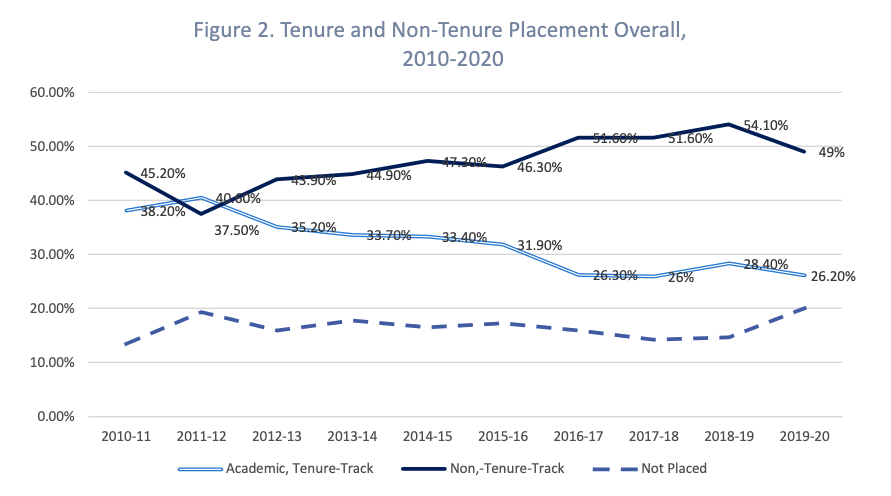
<p>However, it’s important to note that the above figure covers all job postings. This chart, <a href="https://preprints.apsanet.org/engage/api-gateway/apsa/assets/orp/resource/item/61649e5d8b620d1d574c4b7f/original/apsa-graduate-placement-report-analysis-of-political-science-placements-for-2018-2020.pdf">in the 2018-2020 report</a>, indicates that the number of <em>tenure-track</em> jobs have steadily declined over this period (even before 2020), replaced by non-tenure track jobs.</p>

<p><a href="https://preprints.apsanet.org/engage/api-gateway/apsa/assets/orp/resource/item/61649e5d8b620d1d574c4b7f/original/apsa-graduate-placement-report-analysis-of-political-science-placements-for-2018-2020.pdf"><img src="/images/apsa-jobs.png" alt="From APSA's 2018-2020 eJobs report." /></a></p>

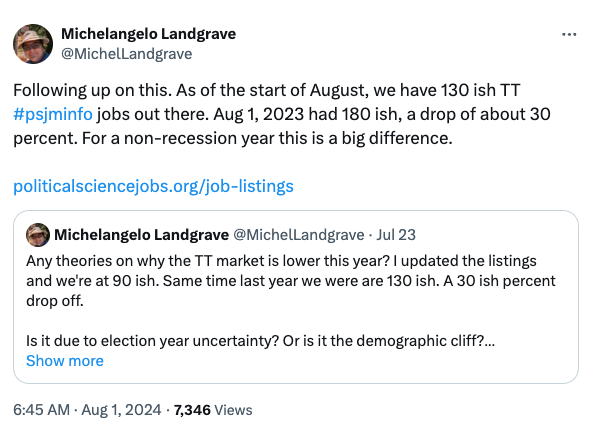
<p>The anecdotal evidence I’ve heard indicates that job numbers recovered in the most recent cycles. But early evidence <a href="https://twitter.com/MichelLandgrave/status/1819006532790505672">compiled by Professor Michelangelo Landgrave</a> suggests that this increase may have been due to pent up demand, and the 2023-2024 market is down from last year.</p>

<p><a href="https://twitter.com/MichelLandgrave/status/1819006532790505672"><img src="/images/ml-tweet.png" alt="From Michelangelo Landgrave (@MichelLandgrave)" /></a></p>

<p>These statistics only provide some weight to what we already know: it’s difficult to get a tenure-track job. There are generally more people competing for fewer slots, and the competition is increasing each year.</p>

<h2 id="academia-is-sales">Academia is Sales</h2>

<p>I don’t share these worrying statistics to depress or frighten (although apologies if that is the effect). I share them to illustrate the point that it’s hard out there, and finding a job is its own job. And part of that job is promoting yourself and your work because academia is actually sales. Oops. Sorry.</p>

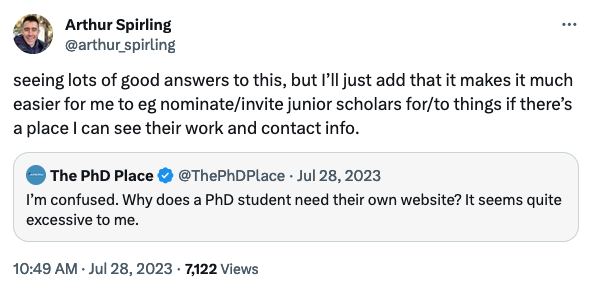
<p>I think Political Scientist <a href="https://twitter.com/arthur_spirling/status/1684984325333233685">Arthur Spirling’s Tweet</a> encapsulates this nicely:</p>

<p><a href="https://twitter.com/arthur_spirling/status/1684984325333233685"><img src="/images/spirling-tweet.png" alt="Screenshot of a tweet by Arthur Spirling noting that having a website makes it easier for senior scholars to find and invite junior academics to events" /></a></p>

<p>If people cannot find you or figure out what you’re about, you cannot be invited to things. And no, your picture and email address on the department website do not count. <a href="https://twitter.com/arthur_spirling/status/1684986155899744256">As Arthur Spirling goes on to say in another Tweet</a>—these do not usually include working papers. And I’ll add, they only occasionally include fields of study or subfields or current CVs. They are rarely updated, and only on the administrator’s or university’s annual schedule. If someone comes across your profile, but they don’t know what you study or what you are about, they will move on.</p>

<p>I am surprised by how often I look up a graduate student—perhaps I saw on Twitter (er…X) that they’ve won an award, or they’re going to be presenting on my conference panel), only to discover that I can find very-little-to-nothing about them. This is a missed opportunity for both of us.</p>

<p>And when you are <a href="https://benjaminnoble.org/blog/conferences">attending conferences</a> (if you follow my advice), you should be reaching out to people and asking for meetings. When you reach out and people don’t know you, they will inevitably look you up to learn who you are and what you’re about. They will probably still say yes even if you do not have a website. But if you do have one, then you maximize the quality of the meeting because they can get a sense of who you are and what you’re working on, and maybe even read your abstracts and ask about your papers.</p>

<p>From this perspective, you cannot afford <em>not</em> to have a website.</p>

<h2 id="making-a-website-in-2023-2024-is-not-asking-a-lot">Making a Website in <del>2023</del> 2024 Is Not Asking a Lot</h2>

<p>Given the pressure to “publish or perish,” there is a concern that spending time to create and maintain a website is costly, and that time would be better spent on publishing. But this is a false tradeoff for several reasons.</p>

<p>First, promoting your publication is <em>part</em> of the publication process. Yes, the journal will advertise your article when it first comes out, but who will notice and who will remember? A website gives you a starting point to share your article and make it easy to find.</p>

<p>I am not so naive as to think that just posting a link on your website increases your article’s reach and engagement (I <em>did</em> work in advertising before getting my PhD), but it does create another point of contact for someone to find it. If you meet someone at a conference and they look you up, they might find your paper. If you have your website url in your email signature and someone clicks on it, they might find your paper. If someone googles the topic of your paper, it’s possible they will find your website and that article. A website creates a touchpoint. And often, you can post the pre-publication version of your paper on your website even after it’s published, so people who lack expensive institutional subscriptions can read your work.</p>

<p>Second, creating a website can generally be quite quick and easy. And they rarely need updating (unless you’re super prolific and publishing constantly…in which case…what are you doing without a website!?). Again, it’s <del>2023</del> 2024, not 1993. In 1993, making a website was quite an undertaking. In <del>2023</del> 2024, there are so many free and/or user-friendly services to make the process easy. As I describe below, there are several almost-free options and many are easy to use. And once you set up your website it’s good to go. It’s not a Twitter (err…X) account that requires continual checking, posting, and engagement. It just sits there. And when you have a new working paper or a change to your CV or new teaching materials (or a new 2000 word blog post because you just cannot help yourself), you add one new line. That’s it. Set it and forget it.</p>

<h2 id="but-i-dont-have-anything-to-put-on-my-website">But I Don’t Have Anything to Put on My Website</h2>

<p>Ok, fair enough. If you are a first-year graduate student, you likely do not have working papers or a research agenda or teaching experience to share. If that is the case, then you probably do not need a website just yet.</p>

<p>I did not create my website until my second year of graduate school when I had a working paper to share and when I was planning to attend my first conference. This is a good rule of thumb. You should make a website when you have something to share. And when you’re attending your first conference, you should have something to share.</p>

<h2 id="what-should-i-put-on-my-website">What Should I Put On My Website?</h2>

<p>Like many things in academia (journal articles, job market materials), websites are very formulaic. Don’t deviate too much from this! Academics are expecting, and looking for, certain things on your website, so if you make them too hard to find or get too creative, you’re putting up another barrier. Play within the constraints of the format. Don’t try to create a new format.</p>

<p>Most websites have the following structure:</p>
<ul>
  <li>Welcome/About: a landing page where you say a bit about your institutional affiliation, position, and broader research and/or teaching agenda.</li>
  <li>Research: a list of publications, including those published (with links to the publisher’s site and the ungated version) and working papers (with links if and when possible).</li>
  <li>Teaching: the courses you teach or have taught, and optionally, links to syllabi and teaching materials.</li>
  <li>Contact: my contact information is on the homepage and sidebar, so I don’t have this page, but many do.</li>
  <li>Anything extra: I have another page with these blog posts. Others have pages with their own blog posts, press articles, interests, etc. Again, show some personality, but be careful here! Don’t go too crazy. This is your <em>professional</em> website.  Save the pictures and blog posts about your FunkoPop collection for your personal Substack.</li>
  <li>URL: you should probably spend the ~$10 a year for a custom domain name if possible.</li>
</ul>

<h2 id="some-resources-for-making-a-website">Some Resources for Making a Website</h2>

<p>My goal here is to convince you about the importance of creating a website and the ease with which it can be done, not teach you how to make one from scratch. Fortunately, others have done this work better than I could have:</p>

<ul>
  <li><a href="https://jayrobwilliams.com/posts/2020/06/academic-website/">Rob Williams has an excellent blog post</a> about how to create a free GitHub pages website (like mine). This is the post I followed to set up the website you’re reading right now.</li>
  <li><a href="https://mimansajaiswal.github.io/posts/personal-website-hosting/">Mimansa Jaiswal</a> has an incredibly thorough post reviewing several easy and cheap options for website-making.</li>
  <li><a href="https://x.com/carlislerainey/status/1757368258104045632">Carlisle Rainey has shared the code</a> for his GitHub site that contains some fancy extras.</li>
  <li><a href="https://x.com/rmkubinec/status/1823385489186988133">Robert Kubinec recommends Quarto</a> in this Tweet.</li>
  <li><a href="https://www.squarespace.com/">Squarespace</a> can be pricey, but their websites look nice and are very user friendly.</li>
  <li>There’s also <a href="https://wordpress.com/">Wordpress</a>, which is fairly inexpensive and straightforward.</li>
  <li>There are others like Wix that I have seen people use, I just don’t have the experience to (or not to) recommend them.</li>
</ul>

<p>A word of warning: your university might have its own website builder, and you can probably get a free domain name like yourname.youruniversity.com. I would caution against going down this route. You are probably going to change institutions one day (that’s the goal of the job market!), and then, you won’t be able to take it with you. You’ll have to start over. You want your own space that is all yours and that can evolve alongside you.</p>

<h2 id="go-forth-and-make-a-website">Go Forth and Make a Website</h2>

<p>Is it just one more thing to do when you are already overworked and overstressed? Yes, I won’t deny it. But promoting yourself is part of the job, not a nice extra. You need to make it easy for people to find you so they can read and cite your work, hire you, invite you to things, and start a conversation.  It takes a bit of effort. But it’s essential.</p>

<hr />

<div class="footnotes" role="doc-endnotes">
  <ol>
    <li id="fn:1" role="doc-endnote">
      <p>Again, this was a much better subhead when I started this post in Summer 2023. Publish or perish comes for blog posts too, I guess. <a href="#fnref:1" class="reversefootnote" role="doc-backlink">&#8617;</a></p>
    </li>
  </ol>
</div>]]></content><author><name>Benjamin Noble</name><email>b2noble@ucsd.edu</email></author><summary type="html"><![CDATA[And some practical advice for how to make one and what to put on it.]]></summary></entry><entry><title type="html">How to Be a Better Reviewer (JAWS Event Recap)</title><link href="https://benjaminnoble.org/blog/reviewing" rel="alternate" type="text/html" title="How to Be a Better Reviewer (JAWS Event Recap)" /><published>2023-12-09T00:00:00-08:00</published><updated>2023-12-09T00:00:00-08:00</updated><id>https://benjaminnoble.org/blog/reviewing</id><content type="html" xml:base="https://benjaminnoble.org/blog/reviewing"><![CDATA[<p><img src="/images/review_header.jpeg" alt="Bing Search's interpretation of reviewing a manuscript." /></p>
<p align="center">
    <figcaption style="font-family: inherit; color: grey; text-align: center;"><p>(Bing Search's interpretation of reviewing a manuscript.)</p></figcaption>
</p>

<hr />

<p>I was always told that when you receive a set of reviews, you should look at the decision and then close the email for 24 hours.</p>

<p>If it’s a rejection, process those emotions and get the initial sting out before turning to the comments. If it’s an R&amp;R—even more reason to close the email. Celebrate the good news before souring yourself on all of the work you have yet to do.</p>

<p>Of course, I never do this.</p>

<p>I immediately dive into all the gory details and quickly become incredulous that someone, <em>anyone</em>, could think that there was room for improvement on such a perfect paper! If it wasn’t perfect, after all, I never would have submitted it!</p>

<p>Then I wait my 24 hours.</p>

<p>When I come back and read the reviews a second time, <a href="https://benjaminnoble.org/blog/get-feedback">after processing</a>, <em>then</em> I realize that, actually, most of the things the reviewers and editor said were right, and addressing the feedback has always made the paper better.</p>

<p>This is a story of receiving reviews. But to receive reviews—especially reviews that improve the paper—there have to be people on the other side of the screen giving their time and labor to produce them. As academics, though, we are rarely taught how to do this act of service.<sup id="fnref:1" role="doc-noteref"><a href="#fn:1" class="footnote" rel="footnote">1</a></sup> It is often a skill that we have to learn on the job, over time.</p>

<p>To that end, the Junior Americanist Workshop Series (<a href="https://jawspolisci.network/">JAWS</a>) hosted a panel featuring <a href="https://www.colorado.edu/wgst/montoya">Celeste Montoya</a>, <a href="https://www.nadiaebrownphd.com/">Nadia Brown</a>, and <a href="https://dornsife.usc.edu/profile/christian-grose/">Christian Grose</a> about how to be a better reviewer. Below, I paraphrase the panelists’ comments based on my contemporaneous notes and impressions. All errors are my own.</p>
<h2 id="a-review-is-for-the-author-and-the-editor">A Review is for the Author AND the Editor</h2>

<p>As a reviewer, you have a dual role in helping the editor (as a subject matter expert in your subfield who can critically evaluate the manuscript) and in helping the author (in providing targeted feedback given that subject matter expertise). When writing your review, you need to speak to both audiences. You probably already have a good handle on providing feedback to the author (unless you’re being jerk about it, in which case, stop doing that), but the panelists provided some good insight into what they are looking for in a review as editors.</p>

<p>The biggest insight to come from the discussion was: editors want to know, plainly, whether the article makes a significant contribution. As authors, we all do a bit of puffing ourselves up. We all say “this article is so timely and important.” But of course, if everyone says their article is so timely and important, it’s impossible for an editor (who is probably not familiar with the subfield) to know whether an article truly is timely and important or whether the author is just saying what everyone says. As the subject matter expert, however, you can critically evaluate the validity of these claims. What editors are looking for is clear advice on whether the contribution is significant and why the article merits (or does not merit) publication.</p>

<p>To that end, all three panelists said to <strong>stop writing the summary paragraph</strong> at the beginning of the review. I guess we have all been told, at some point, to summarize the argument at the top. My understanding is that it signals to the editor you read the article, and it signals to the author that you understand what they’re trying to do. But the editors said they have already read the article, and it will be pretty clear if you didn’t—even without the summary. So this paragraph ends up wasting valuable time and space in a review that is probably already too long. Instead, the panelists suggested writing a paragraph contextualizing the significance and contribution of the article in your own words. Especially if you like the paper and want to see it published, you can use this paragraph to provide insight about why, and justify the authors’ importance claims. As the subject matter expert, you are uniquely qualified to provide this insight in ways editors are not always well equipped to assess.</p>

<h2 id="when-youre-asked-to-review-a-paper">When You’re Asked to Review a Paper</h2>

<p>You should probably just accept.</p>

<p>But what if…</p>
<ul>
  <li>You’re a bad fit for the topic? Or you’re not a subject matter expert? <strong>You should probably just accept.</strong> The editor probably had a reason for choosing you, and often, it’s because they’re trying to assemble a team of rivals. The editor felt that you had some unique perspective to bring to the table. You can also plainly state your perspective in the review itself. It’s fine to write “I am a substantive scholar of civil wars, but I am not familiar with the methodological approach, so my review is targeted toward the theory and substantive findings.”</li>
  <li>You’re busy (<em>wink</em>)? <strong>You should probably just accept.</strong> Reviewers will get very grumpy if you reject a couple of reviewer requests and then submit three articles to their journal with all of the time you saved by not reviewing.</li>
  <li>You’re actually busy? <strong>You should probably just accept.</strong> Then, tell the editor that you are busy and cannot complete the review in the one month timeline but can in two months. Then, let the editor decide if they want to find someone else or if they are ok waiting the additional month.</li>
</ul>

<p>If you actually do need to decline, because you’re actually really really busy and do not have the capacity, or because the article was written by your best friend and co-author, or some other reason, then the panelists said the best thing you can do is provide suggestions for alternative reviewers. Ideally, with your rejection, you could provide 3-5 alternates with their email addresses and a sentence about why you think they would be a good fit for the article.</p>
<h2 id="how-to-review-a-paper">How to Review a Paper</h2>

<p>Everyone has their own approach to reviewing a paper, and Celeste provided some insight into her workflow:</p>

<p>First, the whole thing should take a couple of hours. Start by reading the paper through to get a general sense of what you do and don’t like about the paper. Then, read it a second time, getting more into the details.  When writing your review, begin with an abstract (primarily targeted toward the editor) that details what is good about the paper, what issues exist, and signals whether your opinion is favorable or unfavorable (without necessarily explicitly saying your editorial decision). Then, focus on the author by providing major feedback and supporting points. Overall, Celeste suggested keeping things concise—a review for a full-length article should be about 1.5 pages single spaced.</p>

<p>This approach generally conforms with my own, although often my first read-through is where I make most of my major notes and comments. On the second read, I look for anything I missed the first time (sometimes, that means I wrote a criticism the authors had actually answered, other times, I did not catch some omission on the first read). I was also writing the summary paragraph, but after this panel, I am going to stop doing that and start writing the significance paragraph instead. You might also look at <a href="https://miryaholman.substack.com/p/how-i-review-a-paper">how Mirya Holman reviews a paper</a>.</p>

<p>Beyond the step-by-step, the panelists had some more general advice:</p>
<ul>
  <li>Christian noted that he “likes hamburgers and ice cream, not papers.” That is, don’t approach a paper from the perspective of liking or disliking it (or, at least, keep it to yourself). Instead, approach the paper from the perspective of what it does well and where it does not succeed, and point that out to the editor and author. You can <em>dislike</em> a well-executed paper and recommend it for publication.</li>
  <li>Celeste noted that clear accepts and clear rejects tend to be short, while R&amp;Rs tend to be much longer. However, if your review is too short—for example, if you just write “This is an excellent paper and it should be accepted as is”—the editor has nothing substantive on which to base the decision. Again, you should explain the significance of the article and <em>why</em> you feel it should be accepted as is. If you do not provide enough detail, the editor may not even be able to use your review in the decision-making process.  On the flip side, if your review is nasty and mean, the editors may simply throw it out.</li>
  <li>Nadia advised that you omit any discussion of your recommendation in the review itself (i.e., do not write “this should be accepted”) and to save that for the dropdown in the editorial manager. If you write that the article should be accepted and put that in your review to the author, the editor is in an awkward spot if they end up rejecting the article.</li>
</ul>

<p>Finally, what should you put in the “for the editor’s eyes only” box? The panelists advised to use this box sparingly. Reserve it for concerns about ethics, plagiarism, and other sensitive concerns. Use it to contextualize your editorial decision—for example, if you say “major revision,” provide some insight into what you mean by that and what you would be looking for so the editor can decide if they actually think it is feasible for the author to complete. For instance, even if you say the article should be revised, the editor may decide to reject given the amount of work they think needs to be done and the journals submission/acceptance rates.</p>

<p><em>Do not</em> use the box for negative feedback that you do not wish to share with the author. If you have negative feedback, you should politely share that with the author so they know how to improve their article and to put all your cards on the table. As Celeste said, if you only share supportive comments with the author and only share negative feedback with the editor, the author is going to be very puzzled when their paper is rejected but the review is very supportive and positive.</p>

<p>And remember—you’re anonymous only to the author, not the editor!</p>

<hr />

<p>Thanks to <a href="https://jawspolisci.network/">JAWS</a> for hosting a productive and helpful workshop. Look out for more professional development opportunities and workshops on their website, and sign up for the mailing list!</p>

<hr />

<div class="footnotes" role="doc-endnotes">
  <ol>
    <li id="fn:1" role="doc-endnote">
      <p>Here, I want to shout out Wash U’s political science program which actually does have a semester-long workshop for third year students in which you actually do get to practice writing reviews for classmates. Super helpful! <a href="#fnref:1" class="reversefootnote" role="doc-backlink">&#8617;</a></p>
    </li>
  </ol>
</div>]]></content><author><name>Benjamin Noble</name><email>b2noble@ucsd.edu</email></author><summary type="html"><![CDATA[Avoid being Reviewer 2 (and stop writing the summary paragraph!).]]></summary></entry><entry><title type="html">An Introvert’s Guide to Navigating Academic Conferences</title><link href="https://benjaminnoble.org/blog/conferences" rel="alternate" type="text/html" title="An Introvert’s Guide to Navigating Academic Conferences" /><published>2023-10-17T00:00:00-07:00</published><updated>2023-10-17T00:00:00-07:00</updated><id>https://benjaminnoble.org/blog/conferences</id><content type="html" xml:base="https://benjaminnoble.org/blog/conferences"><![CDATA[<p align="center">
  <img src="https://images.unsplash.com/photo-1560439514-4e9645039924?auto=format&amp;fit=crop&amp;q=80&amp;ixlib=rb-4.0.3&amp;ixid=M3wxMjA3fDB8MHxwaG90by1wYWdlfHx8fGVufDB8fHx8fA%3D%3D&amp;w=1470" alt="alt text" />
    <figcaption align="center" style="font-family: inherit; color: inherit;"><p>(Photo via Product School on Unsplash)</p></figcaption>
</p>

<hr />

<p>In academia, the paper is the product.</p>

<p>When I began this journey, I (naively) thought this simple fact meant one should spend 90% of their time writing the paper and 10% of their time promoting it. Conferences, in this (incorrect) model of the world, were something extroverted, outgoing people could do to fulfill those promotional obligations, and as an added bonuses, they got to meet new people, go to happy hours, and put the conference on their CV. Introverted people (again, in this incorrect model of the world) could reach out to people in their subfield via email, have a Zoom meeting (especially post-2020), and maybe go to the annual conference in their job market year…if they really had to (and yes, you really have to).</p>

<p>Again, this was an incorrect model.</p>

<p>Maybe the most important thing I learned in grad school (which had nothing to do with clustered standard errors or subgame perfect equilibria) was this: while the paper is the product, the target balance of paper-writing versus what I’ll call “relationship-building” (of which conferences are one element) is closer to 50-50 than 90-10.<sup id="fnref:1" role="doc-noteref"><a href="#fn:1" class="footnote" rel="footnote">1</a></sup></p>

<p>The bad news is that you, the humble introvert, should go to conferences (if and when you can afford to do so.)<sup id="fnref:2" role="doc-noteref"><a href="#fn:2" class="footnote" rel="footnote">2</a></sup> Extroverted people must view this kind of advice as a win-win. The humble introvert, on the other hand, might be left with a sense of dread as they think about walking into a crowded room full of strangers where they have to approach Ms. Senior Academic, shake her hand, and say “Hello, my name is Ben. I study the presidency. How are you?”</p>

<p>The good news is that this model of conferences is also wrong (or at least, it is only one model). You can design a conference plan that suits you, your personality, and your level of complete and total dread over having to introduce yourself to strangers in a hotel lobby.</p>

<p>Given my experiences at several larger conferences, here’s my introverted action plan:</p>

<h2 id="before-you-apply">Before You Apply</h2>

<p><strong>Don’t Rush It:</strong> Before going to a conference, you have to make the decision to attend. So when should you start going? When you’re ready. Although no one is thinking about you as much as you’re thinking about you, one goal of the conference (besides to meet potential co-authors and make friends within the discipline) is to advertise yourself and your work. So you want to make a good impression and have work to advertise.</p>

<p>I applied to my first regional conference (MPSA) in my second year when I had <a href="https://www.cambridge.org/core/journals/political-science-research-and-methods/article/abs/energy-versus-safety-unilateral-action-voter-welfare-and-executive-accountability/83154F276FCBB0FC7745284A36CE4FA4">a solo-authored working paper</a> that I was ready to present.<sup id="fnref:3" role="doc-noteref"><a href="#fn:3" class="footnote" rel="footnote">3</a></sup> I know other people who applied around that time with an advisor co-author. Some went in their first year as a non-presenting attendee. Others waited until their third or fourth year. You can go whenever you’re ready, but there’s no need to race into conference attendance. It only gets easier the more experience you have and the more papers you write. Much of the small talk revolves around your work and their work, and with time, you’ll have more to discuss and <a href="https://benjaminnoble.org/blog/reading">the knowledge to engage more deeply</a> with your interlocutors about their work. <strong>I believe the right time to start attending conferences is whenever you have a good working paper you’d be happy to post on your website, share with people, and present at the conference</strong>—whether that’s your second year or your fourth year doesn’t matter.</p>

<p>Additionally, you want to be independent at these conferences. Your advisor, advanced graduate students, your junior faculty co-authors—they all want to go to the conference to see old friends, meet new people, and share their work. Surely, they will be happy to make some introductions, and they might invite you lunch or dinner, or attend your panel. But go in with the mindset that you will be your own person. Do not cling to people you know. You want to establish your own network and you want to give them the space to do their thing.</p>

<p><strong>Apply as a Presenter:</strong> Anyone can attend a conference as long as they pay the entrance fee. This includes academics who aren’t presenting, grad students, and occasionally, interested non-academics. My graduate department did not fund non-presenter attendance, which serves as an incentive to only apply when you have work to share. I find it much easier to go into the conference with a paper because that is the lowest hanging conversational fruit. I’ve already thought deeply about the paper and <a href="https://benjaminnoble.org/blog/short-talk">practiced my presentation</a>, so it’s never hard to say “this is what I’m working on” and have that discussion.</p>

<p><strong>Be Selective:</strong> If you really wanted to (ok, <em>you</em> don’t want to—because you’re an introvert reading this article, but if someone wanted to), you could go to a political science conference every month. The annual APSA meeting, the regional conferences (e.g., MPSA, SPSA, etc), the European meetings (e.g., EPSA), field and sub-field specific conferences and workshops, and so on. At some point, you would run out of time to the write papers you need to present.</p>

<h2 id="before-you-go">Before You Go</h2>

<p><strong>Set Up Some Meetings:</strong> Setting up meetings is the core of my conference strategy. I am not the kind of person who goes to all the happy hours and hangs out in the conference lobby shaking hands and handing out business cards. The thought alone makes my mouth dry and my hands wet. No!</p>

<p>To avoid all that, I set up one-on-one meetings with four or five people well in advance of the conference. Doing so ensures I meet new people in my sub-field network at the conference and doesn’t require that I do any random approaches.</p>

<p>Here’s how it works. <strong>First, identify four or five people you’d like to meet at the conference. Like, that you actually sincerely want to meet and want to talk to.</strong> I tend to choose a couple grad students, a couple junior faculty, and one senior person. I choose people whose work I am familiar with, who work in my sub-field (the presidency, Congress), or my broader field (American institutions), and/or who I have some tenuous connection to (e.g., they have co-authored with someone on my committee, they have visited my university before and I said hello to them, I saw them in an online workshop, etc).</p>

<p>One month before the conference (do this before peoples’ schedules fill up!), I send an email to each person introducing myself (e.g., my name, my institution, my role (grad student, assistant professor), a sentence about what I’ll be presenting), signposting why I’m reaching out (e.g., I’ve read your recent publication in the APSR about X, I’m sure we have a lot to discuss given our shared interest in Y.), and asking them if they have time <em>for a brief coffee and chat</em>.</p>

<p><strong>The pre-scheduled coffee-and-chat paradigm offers a very low stakes opportunity for both you and the interlocutor.</strong> Note that the interlocutor is going to be busy (especially if they are not a grad student)—they have probably been to several conferences, have many friends in the discipline (from grad school, post docs, other conferences) that they want to see, other academics they are trying to meet, etc. Coffee fits into their schedule in any free 30m slot, is casual, is cheap, and can adjust in time to the quality of conversation (I’ve had 20m coffees and 90m coffees). If you do want to schedule a meal, ask other grad students rather than the faculty who are going to be busier and have larger networks.</p>

<p>Note that these same advantages accrue to you, the introvert. You can schedule the coffees around panels or times you want to just be alone in your hotel room, the time you feel most social (e.g., morning, afternoon), do not involve alcohol or food, and if it’s not going well, you can always pull the rip cord in a way that seems very natural—”well it was so great to chat, I need to go [to another meeting/to a panel soon/to take care of a little bit of work].” You cannot do that at lunch when the waiter has not taken your order.</p>

<p>In my experience, people almost always say yes. And these end up being very high quality conversations because I reached out to people who have very similar research interests and who are cool people because they have worked with cool people I like at my university. These meetings have led to co-authoring opportunities, future connections, and friendships at the next conference.</p>

<p><strong>Be Able to Describe Your Project in One Sentence:</strong> When you meet people, they will ask you what you research or what you’re presenting. Be ready to describe your work in one sentence and in one minute. This takes practice. Write several drafts of this before the conference.</p>

<p><strong>Set Goals and Be Kind to Yourself:</strong> When you’re at the conference, it can feel like you should spend every waking minute talking to people or attending panels. No! Take care of yourself and do the conference in a way that is respectful to yourself. In addition to my own presentation, every conference, I pledge to go to at least one panel per day where I ask one question and have at least one one-on-one meeting per day I’m there. If I do that, <em>everything else</em> is gravy. If I don’t want to go to a happy hour because I’m socialed-out, as long as I’ve done my panel and my one-on-one, I give myself permission to get dinner by myself and go to bed early. If you do this for three days of the conference, then you’ve made three quality connections and learned something new from 4 $\times$ 4 = 16 scholars in your field.</p>

<h2 id="at-the-conference">At the Conference:</h2>

<p><strong>Go to Your One-on-Ones:</strong> Show up to the meeting spot early. Know what the person is working on (from paper titles on their website) and know what their presenting (from the conference website). <strong>Be interested in them and what they do. Be sincerely interested. Not instrumentally interested.</strong> Go to their panel if possible and in the meeting, ask them a question about their presentation if it’s after they’ve presented. Aim for 30m of conversation. If it’s going well, obviously keep talking until one of you has to go or the conversation runs out of steam. But don’t hang on too long.</p>

<p><strong>Go to Some Panels:</strong> Go to the ones that are of sincere interest. Ask a question. Introduce yourself to the presenters after and follow up on something they said.</p>

<p><strong>Give Your Talk:</strong> Arrive early. Be prepared with your presentation downloaded on your own computer, on a flash drive, in your email. See my <a href="https://benjaminnoble.org/blog/short-talk">long guide on short talks</a> for advice on how to prepare and present. Stay in the room after and talk to people who come up to you, or engage with the other panelists, or follow up with someone who asked a question.</p>

<p><strong>Go to your Section Business Meeting and Happy Hour:</strong> At the annual conference, your sub-field will have a business meeting and happy hour. At the business meeting, people receive awards and vote on who will chair the sub-field section and who will serve on awards committees. A lot of people in your sub-field will go and it’s good to be in the audience and participate actively. These are the people you will co-author with, get good feedback from, and who will review your paper. Often, sub-fields have an open, catered happy hour after the meeting. Go to this too—it’s the one “networking” event I am sure to attend. You’ll have a good conversation with anyone there because you know they do work in your sub-field and you have some common interests.</p>

<p><strong>Take Care of Yourself:</strong> Drink water. Eat meals. Get sleep. Don’t put extra pressure on yourself to be Ms. Super Social when you’re not that person.</p>

<p><strong>Be Kind:</strong> Don’t gossip. Be humble. Be professional. Don’t drink too much (or at all). Don’t gossip.</p>

<h2 id="after-the-conference">After the Conference</h2>

<p><strong>Send Thank You Emails:</strong> Email all of your one-on-ones thanking them for their time. Based on the conversation, you could consider sharing your paper draft (noting that they do not need to send you any comments and it’s just an FYI) and saying you’re looking forward to seeing them at a future conference.</p>

<h2 id="looking-ahead">Looking Ahead</h2>

<p>It gets easier with every conference. At the first one, you don’t know anybody, and you’re building your network from scratch. But after one or two, you’ve had eight to ten one-on-ones, you’ve meet friends of friends, you engaged with people at the panels. There are many more familiar faces. There are many more people you can reach back out to and grab lunch or dinner with. Go to four or five and <em>you</em> will become the person who has a busy schedule reconnecting with friends and meeting new people. You’ll be the one who grad students are emailing.</p>

<hr />

<div class="footnotes" role="doc-endnotes">
  <ol>
    <li id="fn:1" role="doc-endnote">
      <p>Relationship-building in academia is about more than conferences and networking though. Other elements in this category include: attending and participating in departmental speaker series and online talks and workshops, serving as a discussant, going to the grad student breakfasts with visitors, <a href="https://benjaminnoble.org/blog/advisors">choosing the right advisor</a>, getting to know other faculty and grad students in the department, etc. And I’ll also emphasize that relationship-building is not simply some instrumental thing to game. It is how you meet potential co-authors, make friends, learn new things, and avoid loneliness. <a href="#fnref:1" class="reversefootnote" role="doc-backlink">&#8617;</a></p>
    </li>
    <li id="fn:2" role="doc-endnote">
      <p>Disclaimer time: I was lucky to go to graduate school at an institution that encouraged grad student conference participation and provided some conference funding. Same goes for my current appointment. Obviously not everyone can afford to go to two or three conferences a year—but these strategies still apply if you can only attend one per year or even one in your entire grad school education. Also, look out for funding opportunities through the conference itself or external travel grants for graduate students. Also, look for conferences occurring online (like <a href="https://jawspolisci.network/">JAWS</a>) or near your school. <a href="#fnref:2" class="reversefootnote" role="doc-backlink">&#8617;</a></p>
    </li>
    <li id="fn:3" role="doc-endnote">
      <p>Ultimately, I did not end up going to that conference because of something random that happened in 2020…but I can’t remember what that was right now for some reason… <a href="#fnref:3" class="reversefootnote" role="doc-backlink">&#8617;</a></p>
    </li>
  </ol>
</div>]]></content><author><name>Benjamin Noble</name><email>b2noble@ucsd.edu</email></author><summary type="html"><![CDATA[Here's what to do before, during, and after conferences if the idea of shaking hands with strangers in a hotel lobby makes you sweat.]]></summary></entry><entry><title type="html">All the President’s Mentions</title><link href="https://benjaminnoble.org/blog/presidential-cues-congress-blog" rel="alternate" type="text/html" title="All the President’s Mentions" /><published>2023-09-22T00:00:00-07:00</published><updated>2023-09-22T00:00:00-07:00</updated><id>https://benjaminnoble.org/blog/prescues</id><content type="html" xml:base="https://benjaminnoble.org/blog/presidential-cues-congress-blog"><![CDATA[<p>Presidents hold a unique position as the head of the executive branch and a de-facto party leader. In this role, they nationalize and polarize politics. For example, Gallup polling shows people like the Affordable Care Act more than “Obamacare.”</p>

<hr />

<p align="center">
  <img src="https://content.gallup.com/origin/gallupinc/GallupSpaces/Production/Cms/POLL/murpwcwfluwgog4yswp-ng.png" alt="alt text" style="border:3px solid black;" />
    <figcaption align="left"><p>(via https://news.gallup.com/opinion/polling-matters/169541/name-affordable-care-act-obamacare.aspx)</p></figcaption>
</p>

<hr />

<p>And that provisions of the bipartisan infrastructure bill were more popular when Biden <em>wasn’t</em> mentioned versus when he was</p>

<hr />

<p align="center">
  <img src="https://chs-inc.com/wp-content/uploads/2021/05/slide-6.png" alt="alt text" style="border:3px solid black;" />
  <figcaption align="left"><p>(via https://chs-inc.com/soonersurveyvol33no3-2/ and FiveThirtyEight
 who cited this poll).</p></figcaption>
</p>

<hr />

<p>What incentives does the president’s symbolic power create for Members of Congress? I argue that lawmakers, particularly those in the non-presidential party, reference the president as a negative cue to polarize their core partisan constituents and activate negative partisanship.</p>

<p>I support this argument in two parts. First, using floor speeches given in the House and Senate (<a href="https://data.stanford.edu/congress_text">via Gentzkow, Shapiro and Taddy</a>) between 1973-2016 and a within-member panel, I show that lawmakers reference the president more often when in the out-party.</p>

<p><img src="/images/FIGURE1_prescues_time_plot.jpeg" alt="Figure 1" /></p>

<p>I also show that out-party (in-party) lawmakers reference the president less (more) as the president’s support in a constituency increases.</p>

<p>Then, using data from <a href="https://onlinelibrary.wiley.com/doi/10.1111/lsq.12325">Trussler (2022)</a>, I show that as media nationalizes in a district (as measured using broadband internet access, 2001-2010), House out-partisans step up their presidential referencing behavior (as compared to when they are in the in-party).</p>

<p><img src="/images/FIGURE3_prescues_broadband_me.jpeg" alt="Figure 3" /></p>

<p>But how do constituents react? I run a survey experiment and find that when a republican references Biden in a speech, republican respondents increase support for that senator and believe it is more important to stand for one’s principles than compromise.</p>

<p><img src="/images/FIGURE4_prescues_exp_plot_2x.jpeg" alt="Figure 4" /></p>

<p>However, Democrats do not increase their support for a democratic senator who references Biden.</p>

<p>This research highlights the president’s role as a nationalizing symbol in congressional rhetoric—one out-partisans use strategically to polarize their co-partisan constituents.</p>

<p>Ultimately, the findings are important for understanding how legislators respond to, and reflect, conditions of nationalization and negative partisanship within the institution of Congress.</p>

<hr />

<p>This blog post is based on my 2023 article “<a href="https://onlinelibrary.wiley.com/doi/10.1111/ajps.12822">Presidential Cues and the Nationalization of Congressional Rhetoric, 1973–2016</a>” in the <em>American Journal of Political Science</em>.</p>]]></content><author><name>Benjamin Noble</name><email>b2noble@ucsd.edu</email></author><summary type="html"><![CDATA[Members of Congress often talk about the president. As it turns out, non-presidential partisans do it a lot more. Here's why.]]></summary></entry><entry><title type="html">Write Your First Draft Faster by Writing the “Minimum Viable Paper”</title><link href="https://benjaminnoble.org/blog/minimum-viable-paper" rel="alternate" type="text/html" title="Write Your First Draft Faster by Writing the “Minimum Viable Paper”" /><published>2023-05-07T00:00:00-07:00</published><updated>2023-05-07T00:00:00-07:00</updated><id>https://benjaminnoble.org/blog/minimum-viable-paper</id><content type="html" xml:base="https://benjaminnoble.org/blog/minimum-viable-paper"><![CDATA[<p>The hardest part of the research process is figuring out what exactly you ought to research.</p>

<p>If you have a good, clear question, you can move forward. You can tick through the to-do list of collecting data, measuring concepts, running analyses, writing your introduction and theory.  If you <em>don’t</em> have a good question, on the other hand, then what? It’s not like you can just put “have a good idea” on your to-do list, set aside thirty minutes, and magically come up with one.</p>

<p>So how do you have a good idea?</p>

<p>Well…a <em>bad</em> way to have a good idea is to sit around trying to come up with a good idea. A better approach is to come up with many ideas quickly (most of which will be bad), and then determine which ones are any good. This solution then suggests a new question: how do you know which of the many bad ideas are actually good?</p>

<p>My answer: by writing the <strong>minimum viable paper</strong>.</p>

<h2 id="what-is-the-minimum-viable-paper">What is the minimum viable paper?</h2>

<p>Entrepreneurs talk about something called the “minimum viable product.” It’s the version of whatever they’re working on that is just barely usable—but usable enough to solicit feedback from advisors and customers.</p>

<p>As beautifully <a href="https://en.wikipedia.org/wiki/Minimum_viable_product">described on Wikipedia</a>:</p>

<blockquote>
  <p>“A focus on releasing an MVP means that developers potentially avoid lengthy and (possibly) unnecessary work. Instead, they iterate on working versions and respond to feedback, challenging and validating assumptions about a product’s requirements.”</p>
</blockquote>

<p>As (beautifully?) plagiarized by me:</p>

<blockquote>
  <p>“A focus on releasing an MVP(aper) means that academics potentially avoid lengthy and (possibly) unnecessary work. Instead, they iterate on working versions and respond to feedback, challenging and validating assumptions about a paper’s requirements.”</p>
</blockquote>

<p>Writing an academic article is hard. It takes a lot of time and effort. Time is short. Effort is costly. If you spend weeks coming up with ~the one great idea~ and months perfecting the measurement, analysis, and writing—sanding off all the rough edges before you solicit feedback—you’re taking on an incredible amount of risk. What if, at the end of that process, you discover that no one is excited about the question?<sup id="fnref:1" role="doc-noteref"><a href="#fn:1" class="footnote" rel="footnote">1</a></sup> Or that the hypothesized relationship between x and y doesn’t actually exist? Then you’re back where you were at the beginning of this paragraph—hoping that, this time, it works out better.</p>

<p>The minimum viable paper solves these problems.</p>

<p><strong>First, come up with several (possibly good, probably bad) ideas.</strong> You do this very quickly. You don’t worry about whether any of them are novel or exciting. As <a href="https://anniemurphypaul.substack.com/p/the-benefits-of-creative-grit">Annie Murphy Paul writes</a> in a Substack post on “Creative Grit:”</p>

<blockquote>
  <p>“Research shows that creativity stays steady or even increases across the length of an idea-generation session. Conventional and obvious notions are often the first to surface, and it takes a while to clear these out and move on to more original ideas.”</p>
</blockquote>

<p>Ironically, focusing on quantity over quality is more likely to lead to ~the one great idea~ than a determined pursuit of it. For some tips on how to have more (bad) ideas, see also: my post on <a href="https://benjaminnoble.org/blog/more-ideas">how to have more ideas</a> and Jason Zook’s post on <a href="https://wanderingaimfully.com/brainstorming/">No Bad Ideas Brainstorming</a>.</p>

<p><strong>Second, figure out how you could run a regression <em>today</em>.</strong> At bottom, scientific papers live or die based on the outcome of <code class="language-plaintext highlighter-rouge">lm(y ~ x, df)</code>. If the sign on x matches your hypothesis, and if there are stars, your paper will probably get published somewhere. If not, well…it’s going to be much harder.</p>

<p>Writing the minimum viable paper means running that regression as fast as you possibly can.</p>

<p>In practice, this does <em>not</em> mean working long hours to develop the perfect measure, devise the perfect identification strategy, collect the final data, and run a bunch of robustness checks. Rather, it means figuring out what data and relevant measures <em>already exist</em>, data and measures you can source and apply in a few hours, so that you can get a reasonable indication of whether there’s any <em>there</em> there.</p>

<p>For example, when I started my paper about <a href="https://benjaminnoble.org/files/papers/noble_how_presidents_persuade.pdf">emotional rhetoric in presidential speeches</a>, I had an idea that presidents would use more emotional language when they were institutionally strong. But these are hard things to measure—emotional language, institutional strength. It would take me months to figure this all out. So instead of solving those problems, I loaded up a corpus of presidential speeches I had collected for a previous project. I borrowed an existing measure of moral language (which is related, but not the same, as emotional rhetoric) from my friend <a href="https://www.jstor.org/stable/45295318">Jae-Hee’s awesome AJPS paper</a>, and I coded a binary variable of unified government from <a href="https://en.wikipedia.org/wiki/Party_divisions_of_United_States_Congresses">Wikipedia’s page on party divisions in Congress</a>. Then I ran <code class="language-plaintext highlighter-rouge">lm(moral_language ~ unified, pres_data)</code>.</p>

<p>Lo and behold, the coefficient was positive and statistically significant. This analysis convinced me that there might actually be something there and that it would be worthwhile to think about solving some of those more difficult issues. And what’s more, even if the results went away with better measurement and identification of emotional language, I had insurance: I could always write a paper about presidents’ moral language use.</p>

<p>Now, this all worked out for me. But it could just as easily have failed. So let’s consider alternative scenarios. Had the coefficient been positive but not statistically significant, I wouldn’t have been too discouraged. After all, the moral language variable was just a proxy for the thing I cared about, and these are correlational results. It’s possible that after spending some time on the project, I would get to the hypothesized results. The only thing I’d lose there is the insurance policy. But if the coefficient had been zero, or negative, or negative and statistically significant, I would have worried. Yes, it’s always possible that after spending more time on the project things would turn around. But I would question whether it was worth the time and effort right then. I’d probably try one of the other ideas from that brainstorming session before spending more time on this question.</p>

<p><strong>Third, write the <a href="https://en.wikipedia.org/wiki/Alexander_and_the_Terrible,_Horrible,_No_Good,_Very_Bad_Day">terrible, horrible, no good, very bad</a> version of the paper.</strong> If your initial efforts suggest there’s something there, it’s time to write a short, ugly version of the paper. This document should include the framing, a brief theory and hypothesis section, a description of the data, your dumb regression, and a discussion of the results. Then, take this paper to your advisor and colleagues and get feedback. See if people are excited about the idea (they probably will be—people are always excited about results). See if people have suggestions for how to actually measure and analyze the thing you care about (this helps you!). It is much easier to get good feedback on a thing that exists rather than an idea floating around in space.</p>

<p><strong>Of course, this is not the end of the process, but the beginning.</strong> Once you get feedback, it’s time to iterate and improve. To quote <a href="https://issuu.com/golfstromen/docs/sloan-2009">author Robin Sloan</a>:</p>

<blockquote>
  <p>“As you refine your iterative process, you make the loops faster and more productive. Ideally, iteration isn’t a circle at all; it’s a spiral. With each loop, you know more about the world. With each loop, you’re making something better. With each loop, you’re simply making better.”</p>
</blockquote>

<p>Get better data. Devise a better measurement and identification strategy. Write a better introduction and theory. Frame the paper in a more interesting and exciting way. Get more feedback. Do it again. With each loop, the process goes faster and your paper improves. It’s not easy, but hey, neither is coming up with ~the one great idea.~</p>

<div class="footnotes" role="doc-endnotes">
  <ol>
    <li id="fn:1" role="doc-endnote">
      <p>To what extent does it matter whether others are excited by the idea if <em>you</em> are excited about it? Certainly, many great literatures begin with someone asking and answering a question no one else felt was interesting, important, or worth pursuing. In this case, I would argue that the minimum viable paper strategy is just as applicable. It is much easier to chart a path forward on a novel idea or theory when you can show others the basic framework and initial results rather than try to persuade them from the idea alone. <a href="#fnref:1" class="reversefootnote" role="doc-backlink">&#8617;</a></p>
    </li>
  </ol>
</div>]]></content><author><name>Benjamin Noble</name><email>b2noble@ucsd.edu</email></author><summary type="html"><![CDATA[Don't spend valuable time coming up with an amazing research idea. Come up with many ideas, try the best ones quickly, and choose the one that works.]]></summary></entry><entry><title type="html">How to Learn Statistical Methods By Yourself</title><link href="https://benjaminnoble.org/blog/teach-yourself-methods" rel="alternate" type="text/html" title="How to Learn Statistical Methods By Yourself" /><published>2022-03-19T00:00:00-07:00</published><updated>2022-03-19T00:00:00-07:00</updated><id>https://benjaminnoble.org/blog/teach-yourself-methods</id><content type="html" xml:base="https://benjaminnoble.org/blog/teach-yourself-methods"><![CDATA[<p><a href="https://marginalrevolution.com/marginalrevolution/2022/01/how-does-an-electric-car-work.html">Tyler Cowan
writes</a>:</p>

<blockquote>
  <p>Sean requests: Say you were trying to teach yourself, to a 99th
percentile <em>layperson’s</em> level, how, say, an electric car actually
worked. How would you go about doing that, precisely? I am not sure
exactly how high (or low) a standard that is, but here is what I would
do. 1. Watch a few YouTube videos. 2. Read a book or two on how
electric cars work, along the way finding an expert or mentor who
could answer my questions. 3. If needed, read a more general book
about electricity. 4. Try to explain to someone else how electric cars
work. Try again. I would recommend this same general method for many
particular questions.</p>
</blockquote>

<p>Tyler’s post stood out because it mirrors how I teach myself statistical
methods. Initially, I was going to tweet out the link endorsing Tyler’s
advice with a note that “Try again” at the end of step four should
really be its own step five. As I started composing the tweet, though, I
realized I had more to say.</p>

<h2 id="0-building-up">0: Building Up</h2>

<p>Some people can open up the latest issue of Political Analysis and
quickly get up to speed on the cool new methods, but that’s not me.
Whenever I see two <em>Σ</em> s in a row, I know it’s going to be a long day. I
have to start at the beginning and <em>build up</em> my intuition over
time—starting from the lowest technical level/highest conceptual level
and working my way, piece by piece, down into the details.<sup id="fnref:1" role="doc-noteref"><a href="#fn:1" class="footnote" rel="footnote">1</a></sup></p>

<h2 id="1-conceptual-understanding">1: Conceptual Understanding</h2>

<p>As in Tyler’s advice, I often start on YouTube. Here, I look for the
high-level/conceptual overviews of the topic, often intended for
non-statistical or new-to-statistics learners (see e.g., the <a href="https://www.youtube.com/watch?v=T05t-SqKArY">conceptual
process behind LDA
models</a>). These videos
include toy examples, real-world applications, and very few <em>Σ</em> s. These
resources allow me to get my bearings, point out necessary
prerequisites, and help me think through the roadmap going forward.</p>

<h2 id="2-notation-and-basic-proofs">2: Notation and Basic Proofs</h2>

<p>Moving beyond the “high concept phase,” I turn to textbooks, and if I am
fortunate, publicly-posted lecture notes and slides. The latter are
especially helpful as they are succinct and teaching-focused. These
documents should include some math, and I expect to learn the standard
notation. I go through slowly, making sure I understand how the author
gets from step to step.</p>

<p>I specifically seek out resources targeted towards advanced
undergraduates or first-year graduate students. I avoid published
articles (unless they are specifically how-tos for non-practitioners),
which are written to prove the method to those with an existing
knowledge base (which is exactly what I’m trying to build up).</p>

<p>Occasionally, I won’t be able to figure out what the author is doing,
and I have to decide: am I not understanding because I am missing a
prerequisite or is the resource too technical? If it is the former, for
example—how does one derive a variance-covariance matrix from regression
coefficients?—I will go refresh my memory, often starting from a more
technical resource since I <em>do</em> have some residual<sup id="fnref:2" role="doc-noteref"><a href="#fn:2" class="footnote" rel="footnote">2</a></sup> knowledge of the
topic. If, on the other hand, the resource is too technical, I will
abandon it for something simpler.</p>

<p>I am very promiscuous with my resources. Some will click better than
others. Quickly give up and move on if it seems like something is going
to be too technical at this stage.<sup id="fnref:3" role="doc-noteref"><a href="#fn:3" class="footnote" rel="footnote">3</a></sup></p>

<h2 id="3-code-it-yourself">3: Code It Yourself</h2>

<p>Now it is time to test my understanding—can I make it work in <code class="language-plaintext highlighter-rouge">R</code>?</p>

<p>I start by figuring out what others have already done. For most methods
(unless they are brand new, and honestly, even then) there is an
existing package you can install and a vignette or walk-through with a
toy example. If the method is older, there are often additional
resources on Rpubs or Medium with a conceptual overview (good to
reinforce learning) and a walk-through of how to use the relevant <code class="language-plaintext highlighter-rouge">R</code>
package(s).</p>

<p>After I download the package and run those basic commands, the real work
begins: replicating the results “by hand,” by which I mean, getting the
same results without using the package. That doesn’t necessarily mean
coding my own Gibbs sampler or <code class="language-plaintext highlighter-rouge">lm()</code> function, but I will try to work
through each stage of the process until I am convinced that, with enough
time and effort, I could explain to a first-year grad student,
step-by-step, how the method works.</p>

<p>If this coding exercise is proving too challenging, I will do some
googling to see if anyone else has posted their own code that walks
through the method “by hand” (for a basic example see <a href="https://github.com/bennoble/causal-inference-2022/blob/main/Lab1/lab1_att_po.R">my course
materials on calculating ATEs “by
hand.”</a>
If I cannot find such a resource, I will turn to the package’s source
code and work through it that way (although this is often challenging).</p>

<p>The key is <em>not</em> to be able to write the package yourself, but to be
sure you understand what is happening at each stage of the process
behind the scenes.</p>

<p>Another helpful practice is to simulate fake data, which allows you to
test the assumptions of the model and get an intuitive understanding of
what the model recovers (see <a href="https://statmodeling.stat.columbia.edu/2019/03/23/yes-i-really-really-really-like-fake-data-simulation-and-i-cant-stop-talking-about-it/">Andrew
Gelman</a>
for more on this topic).</p>

<h3 id="4-teach-others">4: Teach Others</h3>

<p>Finally it is time to “teach others.” Or, really, <em>finish</em> teaching
others.</p>

<p>Notice, that by the end of step 3, you’ve basically created the kind of
resource I am looking for when I begin step three. So don’t hoard it!
Help me learn from your process.</p>

<p>You can simply (“simply”) clean and comment your code and post it
online. If you’re embarrassed or nervous or think it’s too obvious,
remember: most people don’t know what you know and your work could be
the key to helping someone else unlock this method for themselves. The
author C.S. Lewis famously made this point:</p>

<blockquote>
  <p>“The fellow-pupil can help more than the master because he knows less.
The difficulty we want him to explain is one he has recently met. The
expert met it so long ago he has forgotten.”</p>
</blockquote>

<h2 id="5-6--n-more-loops">5, 6, …, N: More Loops</h2>

<p>At this point, you should have a pretty good understanding of how the
method works. Not necessarily enough to go write your own package or
publish in PA, but probably enough to get the gist of all those <em>Σ</em> s
and write a paper that uses the method. Depending on my goals, this is
where I stop.</p>

<p>However, if you want a deeper understanding, you can complete a second
loop. Now, start with YouTube videos and text books that are more
technical and less conceptual. You should be equipped to understand
these because you have built a solid foundation. The notation will look
familiar. You’ll nod along when you see the basic results and proofs.
With the basics down, you can focus on the more technical material. You
can challenge yourself by going back to the <code class="language-plaintext highlighter-rouge">R</code> code and working through
a more difficult example or expanding on your script to include the
pieces you skipped over.</p>

<p>Keep repeating these loops until you are satisfied with your level of
proficiency.</p>

<h2 id="concluding-thoughts">Concluding Thoughts</h2>

<p>I should emphasize that this process is not something you do in a day or
even a week. Also, it is generally kind of frustrating and not that fun.
Learning new things is hard! So don’t get discouraged. Keep toggling
back and forth between learning (via YouTube, books, notes, talking to
others, etc), practicing (<code class="language-plaintext highlighter-rouge">R</code> code, proofs), and taking breaks.
Especially that last one.</p>

<div class="footnotes" role="doc-endnotes">
  <ol>
    <li id="fn:1" role="doc-endnote">
      <p>I am no expert in
<a href="https://en.wikipedia.org/wiki/Instructional_scaffolding">scaffolding</a>,
but this process seems related to the <a href="https://en.wikipedia.org/wiki/Zone_of_proximal_development">zone of proximal
development</a>.
The key difference being that the instructor or training wheels come
from the type and complexity of the resource I use at each stage of
the process rather than a “more knowledgeable other.” <a href="#fnref:1" class="reversefootnote" role="doc-backlink">&#8617;</a></p>
    </li>
    <li id="fn:2" role="doc-endnote">
      <p>No pun intended. <a href="#fnref:2" class="reversefootnote" role="doc-backlink">&#8617;</a></p>
    </li>
    <li id="fn:3" role="doc-endnote">
      <p>This juncture might also be the place where you ask someone more
knowledgeable for help, per Tyler’s post. I agree that that is good
advice—even though I am stubborn and often don’t take act on it! <a href="#fnref:3" class="reversefootnote" role="doc-backlink">&#8617;</a></p>
    </li>
  </ol>
</div>]]></content><author><name>Benjamin Noble</name><email>b2noble@ucsd.edu</email></author><summary type="html"><![CDATA[My 4-to-N step process for teaching myself statistical methods. And you can too.]]></summary></entry><entry><title type="html">When Stronger Presidential Powers Could Be Worth The Risks</title><link href="https://benjaminnoble.org/blog/energy-safety-blog" rel="alternate" type="text/html" title="When Stronger Presidential Powers Could Be Worth The Risks" /><published>2021-11-29T00:00:00-08:00</published><updated>2021-11-29T00:00:00-08:00</updated><id>https://benjaminnoble.org/blog/energy-safety-blog</id><content type="html" xml:base="https://benjaminnoble.org/blog/energy-safety-blog"><![CDATA[<p>Americans are wary of presidential power, yet simultaneously demand a “<a href="https://www.vox.com/2014/5/20/5732208/the-green-lantern-theory-of-the-presidency-explained">Green Lantern</a>” president—one who can break through gridlock to enact their agenda. This tension is not new; it’s as old as the Republic itself. In <em>The Federalist, No. 70</em>, Alexander Hamilton raps:</p>

<blockquote>
  <p>“The ingredients which constitute energy in the executive, are, unity; duration; an adequate provision for its support; competent powers. The ingredients which constitute safety in the republican sense, are, a due dependence on the people; a due responsibility.”</p>
</blockquote>

<p><img src="https://64.media.tumblr.com/a6bbe6cb7b0c7860384b713496da192e/tumblr_oh1pnoJgZg1ukhudfo1_540.gifv" alt="Animated GIF from the Hamilton musical showing cast members performing on stage" /></p>

<p>In an era of congressional gridlock and partisan polarization, some scholars argue that the balance has tipped too far in the direction of safety. What we need is <a href="https://www.washingtonpost.com/politics/2020/09/14/how-stronger-presidency-could-lead-more-effective-government/">a more powerful presidency</a>, one that can circumvent a parochial Congress to enact policies in the broad, national interest. In some cases, <a href="https://apnews.com/article/donald-trump-business-legislation-barack-obama-ap-top-news-e9f75e03bb7a41c1a44e9512d4990832">presidents</a>, and <a href="https://www.nationalreview.com/news/sanders-prepares-to-sign-dozens-of-executive-orders-upon-taking-office-we-cannot-accept-delays-from-congress/">presidential hopefuls</a>, have heeded the call, proposing expansive unilateral agendas and promising to go over the heads of lawmakers on Day 1.</p>

<p>Of course, what you think about a president going over the heads of legislators to enact his agenda depends, in some sense, on your politics. As Justice Kagan makes clear:</p>

<blockquote>
  <p>“The desirability of such [presidential] leadership depends on its content; energy is beneficial when placed in the service of meritorious policies, threatening when associated with the opposite.” (2001, 2341)</p>
</blockquote>

<p>Given the narrowness of presidential elections (to say nothing of the normative implications), how do we appropriately balance the desire for presidential action with the demands of democratic deliberation and control? Would it be better to further empower the president to enact policies in the national interest? Or is it better to play it safe, accepting some measure of legislative gridlock to prevent overly partisan or potentially damaging policies from taking effect when someone we oppose takes office?</p>

<p>To help understand these tradeoffs and consider the consequences of expanding presidential power, I develop a game-theoretic model in my 2021 article “<a href="https://www.cambridge.org/core/journals/political-science-research-and-methods/article/abs/energy-versus-safety-unilateral-action-voter-welfare-and-executive-accountability/83154F276FCBB0FC7745284136CE4F14">Energy Versus Safety: Unilateral Action, Voter Welfare, and Executive Accountability</a>,” which I summarize below (with no Greek letters!).</p>

<h2 id="setting-it-up">Setting It Up</h2>

<p>The model takes place over two periods and features an executive, a legislator, and a voter. In each period, the politicians (i.e., the executive and legislator) are tasked with passing a policy, either Policy 1 or Policy  − 1. After the first period, an election is held, and the voter reelects or replaces each politician.</p>

<p>The voter always prefers Policy 1, and he would like the politicians to enact it. However, politicians vary in their policy preferences. Congruent politicians prefer Policy 1, and divergent ones prefer Policy  − 1. Although the politicians know each other’s types, the voter does not. He can only infer their types after observing what policy they enact. Politicians also value holding office and would like to get reelected. Thus, politicians may need to be strategic about their choice.</p>

<p>To answer my research question about the tradeoffs between energy and accountability, I consider two versions of this policymaking game, discussing what the politicians do and how the voter fares in both settings.</p>

<h2 id="the-costs-and-benefits-of-checks-and-balances">The Costs and Benefits of Checks and Balances</h2>

<p>First, I consider a version of the model called <em>Checks and Balances</em>, where the politicians must agree on policy in order to pass it. In the first period, the legislator privately chooses a policy, 1 or  − 1. Then, the executive sees which policy the legislator has chosen. If he ratifies that policy (also choosing 1), then that policy is enacted. If he rejects the policy (by choosing  − 1) gridlock occurs and a status quo policy, 0, is implemented instead. The voter does not see the politicians actions, he only sees the end result—either new policy or gridlock and the status quo.</p>

<p>In the paper, I discuss a semi-separating equilibrium in which the voter reelects politicians when they pass policy 1 and replaces them both otherwise. Importantly, if the voter observes gridlock, he infers that the incumbents are more likely to be divergent than new politicians—even though gridlock only occurs when one politician is congruent and one is divergent. Given the joint policy signal, he has no way of knowing which is which.</p>

<h2 id="going-it-alone">Going It Alone</h2>

<p>Next, I consider an alternative setting, <em>Unilateralism</em>, where, after the legislator privately chooses policy 1 or  − 1, the executive can either play the same game described previously (approving or rejecting the selection), or instead, he can disregard the legislator’s choice and unilaterally implement either policy. However, acting unilaterally is both transparent and costly. First, the voter knows if the executive acted unilaterally, and thus, can perfectly infer his policy choice. Second, the executive must pay a private cost for acting unilaterally.<sup id="fnref:1" role="doc-noteref"><a href="#fn:1" class="footnote" rel="footnote">1</a></sup></p>

<p>If both politicians are congruent types, the executive can implement Policy 1 and win reelection without paying the cost for unilateral action. However, when a congruent executive is paired with a divergent legislator, he can overcome gridlock by paying a cost to implement policy 1 unilaterally. This move increases the executive’s policy payoff, but the transparency also helps him electorally. The voter sees that the executive has enacted Policy 1 unilaterally, which must mean that the legislator is not congruent. The voter doubly benefits—he gets his favorite policy and learns both politicians’ types, allowing him to make better voting decisions. Knowing all of this, a divergent legislator who values reelection may decide to offer Policy 1 in an effort to avoid being outed by unilateral action.</p>

<p>Of course, we might be especially worried about the reverse—when the executive is divergent and the legislator is congruent. Here, the executive can avoid gridlock to enact Policy  − 1. However, transparency in this instance works against him. Yes, he can implement Policy  − 1, but the voter will correctly infer his divergent type, replacing him with a new executive in the election. Thus, divergent types are often constrained by electoral consequences.</p>

<h2 id="when-is-the-unilateral-executive-better">When is the Unilateral Executive Better?</h2>

<p>One might suspect that the voter prefers the game that empowers the politician who shares his policy preferences: Checks and Balances when the legislator is more likely to be congruent and Unilateralism when the executive is more likely to be congruent. And indeed, that is what I find when one politician is much more likely to be congruent than the other. However, if both politicians are similarly likely to be congruent types, then the Unilateral game is always preferable, <em>even when the legislator is more likely to be a congruent type than the executive.</em></p>

<p>We can see this graphically in Figure 1 below. On the <em>x</em>-axis, I plot the probability the legislator will be a congruent type, and on the <em>y</em>-axis, I plot the probability the executive will be a congruent type. The solid line is every point where the voter is indifferent between either version of the game. The white area above the curve covers all prior probabilities of congruence at which the voter would prefer Unilateralism, and the shaded area below the curve represents all prior probabilities where the voter would prefer Checks and Balances. Finally, the dashed 45-degree line, represents a baseline case where the voter prefers the game that advantages the more-likely-congruent politician. Here, we see that the solid curve is always weakly below the 45-degree line (and the white region encompasses the 45-degree line). In this “wedge” area between the solid and dashed lines, the voter prefers Unilateralism even when the legislator is more likely to be a congruent type than the executive.</p>

<p><img src="/images/fig1-ua.png" alt="Figure 1" height="350px" width="350px" /></p>

<p>This wedge area is a result of the fact that (1) the congruent-type executive can overcome gridlock under Unilateralism to enact Policy 1, and (2) when he does, the voter learns valuable information about the politicians’ types. Although unilateral powers can be used to circumvent a congruent Congress, there are times the voter is willing to take that risk.</p>

<h2 id="concluding-thoughts">Concluding Thoughts</h2>

<p>Americans are both skeptical of executive power and desirous of a strong leader who can tackle America’s growing challenges. Some scholars have argued that the solution is to further empower the president, however, these arguments often begin from the presumption that the president will have the “national interest” (rather than a partisan or personal interest) in mind. In this paper, I relax that assumption—allowing the executive to be either congruent or divergent, and reach a similar, but nuanced, conclusion <em>(NB: one that assumes, rightly or wrongly, that the policies enacted do not subvert democratic elections)</em>. Although divergent executives may abuse their powers and enact policies that run counter to the voter’s interest, they may be constrained by the same forces that brought them into office in the first place: electoral politics.</p>

<hr />

<p><em>This blog post is based on my 2021 article “<a href="https://www.cambridge.org/core/journals/political-science-research-and-methods/article/abs/energy-versus-safety-unilateral-action-voter-welfare-and-executive-accountability/83154F276FCBB0FC7745284136CE4F14">Energy Versus Safety: Unilateral Action, Voter Welfare, and Executive Accountability</a>” in</em> Political Science Research and Methods<em>.</em></p>

<div class="footnotes" role="doc-endnotes">
  <ol>
    <li id="fn:1" role="doc-endnote">
      <p>This cost captures the bureaucratic resources needed to create an executive order as well as the potential for reversal by a future executive. <a href="#fnref:1" class="reversefootnote" role="doc-backlink">&#8617;</a></p>
    </li>
  </ol>
</div>]]></content><author><name>Benjamin Noble</name><email>b2noble@ucsd.edu</email></author><summary type="html"><![CDATA[Americans are both skeptical of executive power yet desirous of a strong leader who can tackle America’s growing challenges. How should we think about potential benefits and risks?]]></summary></entry></feed>